Magdalena Andersson has been given another chance to form Sweden’s next government after Social Democratic Party leader handed back her first government formation mandate earlier this week.
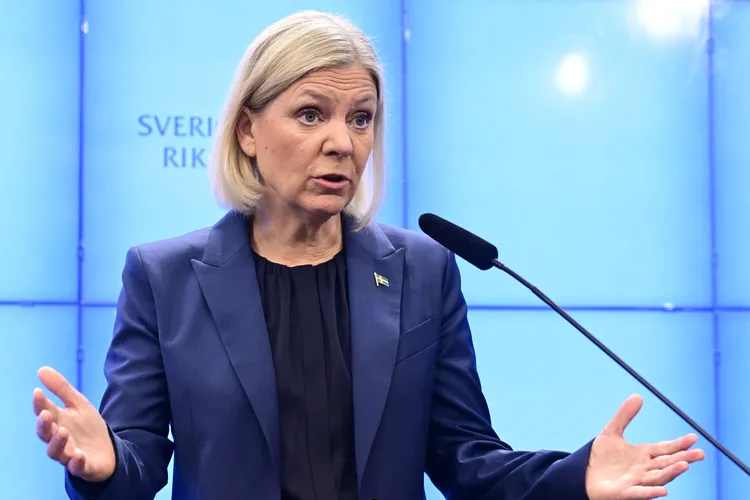
Speaker of the Riksdag Andreas Norlen announced on Friday that Andersson will resume the exploratory talks, known in Sweden as a sonderingsuppdrag, following another round of discussions with the country’s political parties. The new talks will formally begin on Monday, October 5, and Andersson is expected to report back to Norlen by October 12.
The decision comes only days after Andersson abandoned her first attempt to put together a government. She had received the mandate from Norlen on September 18, but said on September 28 that there was no longer a basis for forming a government under her leadership.
The immediate dispute centred on the relationship between the four parties on the left and centre of Swedish politics: the Social Democrats, Left Party, Green Party and Centre Party. The four parties hold 176 seats in the Riksdag, compared with 173 for the four parties that made up the previous government coalition and its parliamentary support arrangement.
Andersson had been trying to build a government around that parliamentary position, but negotiations became more difficult after the Left Party backed Norlen, a member of the Moderate Party, in the election for Riksdag Speaker. Norlen was subsequently elected speaker for a third time.
Andersson argued that the Left Party’s decision to support the Moderate candidate had created a new parliamentary constellation and made it impossible, at that stage, for her to assemble enough support for a government. She therefore returned the mandate to Norlen on September 28.
The move did not mean that the Left Party had abandoned Andersson as its preferred candidate for prime minister. Party leader Nooshi Dadgostar said the party still supported Andersson and wanted her to bring the wider red-green bloc together for negotiations. The Green Party, however, said the Left Party’s decision to support Norlen had made the process more difficult.
The Centre Party has also remained an important part of the parliamentary equation. Its position has complicated efforts to bring the parties together, particularly because of its stance on cooperation with the Left Party. Centre Party leader Elisabeth Thand Ringqvist has said the party has a mandate from voters to pursue a government based in the political centre.
After Andersson returned the mandate, Norlen began another round of talks with party leaders. He also held informal discussions during the week before deciding how to proceed. On Friday, he said the basic political and parliamentary conditions had not changed since Andersson was first given the task.
That assessment was important because Andersson was not the only possible candidate. Ulf Kristersson, leader of the Moderate Party and the outgoing prime minister, had also been discussed as a possible person to receive the mandate. Some Social Democrats had argued that Kristersson should now be given the opportunity after Andersson’s first attempt failed.
Norlen nevertheless decided to return the task to Andersson. The new mandate will begin formally on October 5, and the Social Democratic leader must report to the speaker no later than October 12, although she can request more time. Norlen has said that once the exploratory process is finished, a vote on the prime minister will take place in the Riksdag.
The political obstacles that ended Andersson’s first attempt have not disappeared. The Centre Party and Left Party continue to hold positions that have so far prevented the four parties from agreeing on a common government arrangement. That means Andersson’s second round of talks will have to address the same underlying disagreement that brought the first attempt to an end.
For now, the focus returns to negotiations. Andersson has another week to determine whether the parties can find enough common ground for a government that the Riksdag can tolerate. The decision to give her another mandate does not itself establish a new government. It restarts the search for one.