Cocaine worth about 30 million Fijian dollars ($13.3 million) has disappeared from a Fiji courthouse, with police discovering that the seized drugs had been removed and replaced with counterfeit substances, including flour.
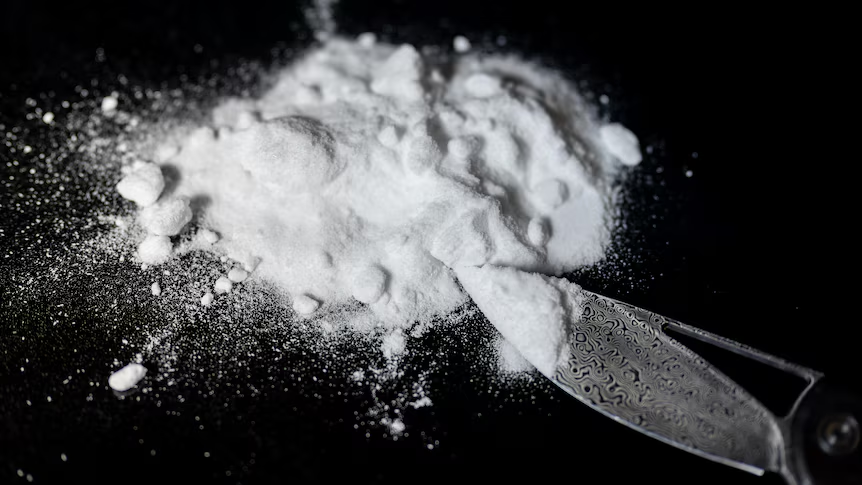
The drugs were evidence in a major criminal case involving Fiji-Canadian national Joshua Rahman, who was convicted of unlawful possession, according to official records. The cocaine had remained in the custody of the Suva High Court while legal proceedings and appeals continued.
The discovery was made on September 15 during an inspection of the court’s evidence exhibits. Police said seven of the 39 cocaine bars originally seized in the case were missing.
Further examination revealed that the problem was more extensive than initially suspected. The cocaine that remained in the evidence storage area had also been replaced with substances that were not cocaine. Police said forensic testing of the remaining exhibits returned negative results, indicating that none of the originally seized cocaine was still there.
“The exhibits were all tampered with, and the investigation is focused on those directly charged with the management of the exhibits at the High Court Registry,” Fiji police said in a statement.
Police Commissioner Rusiate Tudravu said the cocaine had been placed inside the High Court vault in March 2021. Authorities have not established when the drugs were removed or when the substitutions took place.
The exhibits had previously been confirmed as cocaine in testing carried out in 2019, the year the drugs were seized.
Investigators have identified six people working within the judiciary who were considered persons of interest because they had access to the vault, Tudravu said. One of the six was outside Fiji at the time of the investigation.
Police are now examining other evidence stored at the courthouse as they try to determine whether the cocaine case represents an isolated breach or part of a wider problem. Officers are checking other seized exhibits, including cash, according to the police commissioner.
The disappearance has raised questions about how sensitive evidence is stored, monitored and accounted for within Fiji’s judicial system. The fact that the missing cocaine was replaced with another substance has also intensified concerns about the integrity of evidence that remains in court custody.
Opposition politician Jone Usamate raised those concerns in Parliament, questioning whether authorities could be certain that other exhibits held by the court were what official records said they were.
Justice Minister Siromi Turaga described the incident as disappointing and said authorities were working to strengthen security and review existing procedures at the High Court.
The investigation remains focused on determining who accessed the evidence vault, when the cocaine was removed and how the substitutions were carried out without being detected earlier. Until those questions are answered, the case has left Fiji’s authorities facing a broader challenge than the loss of a single batch of seized drugs: restoring confidence in the system responsible for protecting evidence at the heart of criminal proceedings.