Travelling with kids in South Africa is already receiving strong feedback from families, but the latest sentiment data suggests that the country’s tourism industry could do more to address the practical details that often determine whether a family holiday feels easy or exhausting.
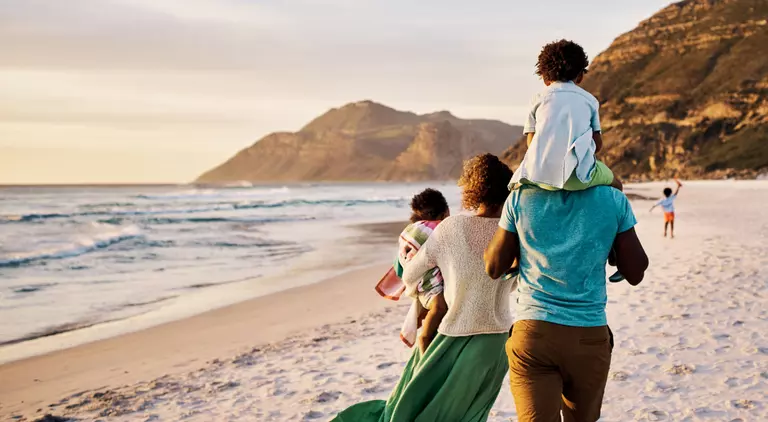
Data Appeal sentiment analysis covering the 12 months to 18 August 2026 recorded a family travel sentiment score of 83.6 across more than 63,000 reviews. Families represented 22.6% of the reviews included in the analysis. The overall picture is positive, but the numbers also reveal a gap between the experiences families enjoy and some of the basic services they depend on while travelling with children.
South Africa has an obvious advantage when it comes to keeping families interested. Its tourism offer does not depend on attractions designed exclusively for children. Wildlife, beaches, marine life, gardens and outdoor spaces can appeal to parents and children at the same time, which is often what makes a family holiday work.
The country’s attractions category recorded a sentiment score of 90.2. Several well-known attractions performed particularly strongly, including Kirstenbosch National Botanical Garden at 95.5, the V&A Waterfront at 95.1, the Two Oceans Aquarium at 92.0 and Boulders Beach at 90.4.
Those numbers reflect the strength of experiences that give families something to share. Children can watch penguins, encounter marine life or explore large outdoor spaces while adults enjoy the same experience rather than simply supervising an activity created for younger visitors.
That distinction matters. Parents travelling with children are not necessarily looking for a holiday where every moment has been designed around kids. They are looking for experiences where children are engaged without adults feeling as though they have left their own holiday behind.
The same pattern can be seen beyond Cape Town. Limpopo recorded family sentiment of 89.2, followed by the Eastern Cape at 86.8 and Mpumalanga at 86.1. For regions built around wildlife and outdoor experiences, those figures point to the potential of safari as a family product rather than an experience traditionally associated only with couples, honeymooners or older travellers.
Individual properties also performed strongly. Black Rhino Game Lodge recorded a family sentiment score of 93.6, while Kruger Gate Hotel recorded 92.1.
The opportunity for safari operators is not necessarily to reinvent the safari experience. It may be to make the existing experience easier for parents to understand before they book it.
Families need straightforward answers. Can young children join game drives? What happens when they cannot? Are there activities for children between drives? Are family rooms or interconnected rooms available? Can meals be arranged around younger children’s schedules?
For parents, those details can matter as much as the wildlife itself. A spectacular game drive does not solve the problem of a family discovering after arrival that the activities they expected their children to join have age restrictions.
Accommodation presents another useful signal. Short-term rentals recorded a family sentiment score of 86.8, compared with 84.3 for traditional hospitality.
The difference is not necessarily about one accommodation model replacing another. It points to something families consistently value: flexibility.
Travelling with children often means carrying more luggage, dealing with different sleeping schedules and making meals and downtime work around younger travellers. A kitchen, additional living space, separate bedrooms and the ability to prepare food at an unusual hour can make a significant difference.
Hotels cannot always provide the space of a private rental, but some of the same principles can be incorporated into hotel stays. Interconnected rooms, family suites, refrigerators, microwaves, flexible dining arrangements and clear information about family facilities can reduce some of the uncertainty that parents face when booking.
The human side of hospitality also remains an important part of the picture. Emotional engagement recorded a sentiment score of 86.4, with hospitality and staff-related measures also showing positive results.
For families, service can become particularly memorable because of small interactions. A receptionist who helps a tired family settle in quickly, a waiter who makes a child feel welcome or a guide who knows how to engage a nervous youngster can change the tone of an entire trip.
Those moments do not always require expensive investment. They depend on staff understanding that children are part of the guest experience, not an inconvenience attached to an adult booking.
The weaker figures in the data appear in some of the less glamorous parts of the holiday. Overall family sentiment stood at 83.6, while the specific family-friendly topic recorded 81.2. Room sentiment was 70.0, safety 70.2 and cleanliness 69.0. Accessibility was significantly lower at 44.5.
These are important figures because practical shortcomings can carry more weight for families than they might for travellers on their own.
An awkward entrance is one thing when a traveller has a suitcase. It becomes a different problem when a parent is carrying a toddler, pushing a stroller and managing additional luggage. A room that feels cramped for two adults can become considerably more difficult when children are sharing the space.
Safety and cleanliness also attract closer attention from parents because the consequences are viewed through the needs of the whole family. These may not be the most visible parts of a tourism marketing campaign, but they can influence the overall impression of a property long after an attraction or scenic view has been forgotten.
Food is another area where the experience is reasonably positive but still leaves room for greater attention to family needs. Food recorded a sentiment score of 79.5, while breakfast reached 80.4 and desserts 81.3.
For families, however, dining is rarely judged only on taste. Timing, choice and convenience can be just as important.
A child may not want the same meal as an adult. Parents may need an earlier dinner. A highchair may be essential rather than optional. A simple children’s portion or a familiar meal can prevent a tired child from turning dinner into the most memorable part of the evening for all the wrong reasons.
The issue is not about lowering the standard of dining. It is about recognising how families actually use restaurants while travelling.
The broader picture from the Data Appeal findings is that South Africa already has many of the ingredients required for a strong family tourism proposition. Wildlife, beaches, outdoor attractions, marine experiences and hospitality are not products that need to be invented. They are already part of the country’s tourism identity.
The more immediate opportunity may be to remove the friction around them.
That starts before a family arrives. Tourism businesses can make it easier for parents to understand which activities are suitable for different ages, what room configurations are available, whether a property is accessible with a stroller and what facilities are provided for children. Clear information can prevent disappointment before it begins.
The same thinking can extend to itineraries. A family may be interested in a safari, a beach and a city attraction, but the pace required to combine those experiences is different from that of a group of adults travelling without children. Families need time for meals, rest, changing plans and the inevitable moments when the day’s schedule does not go according to plan.
There is also a wider family market to consider. Multigenerational holidays bring parents, children and grandparents into the same trip, creating different accommodation and activity requirements. Properties and tour operators that understand those needs can potentially serve a broader range of family travellers without changing the fundamental experiences they already offer.
Perhaps the most useful lesson is that children should not be treated as secondary participants in family tourism. They are part of the experience and, in many cases, strongly influence where a family goes, what it does and how the holiday is remembered.
A first encounter with penguins, a child’s first safari, a hotel swimming pool or a guide who turns a wildlife experience into a story can become the memory that defines the trip for an entire family.
South Africa’s family sentiment score of 83.6 provides a strong starting point. The data also points towards a more practical challenge: improving the rooms, cleanliness, safety, accessibility and family facilities that sit underneath the more visible tourism experience.
For families, the difference between a good holiday and an exceptional one is often not another attraction added to the itinerary. Sometimes it is simply a room with enough space, an accessible entrance, a clean bathroom, a flexible dinner time or a member of staff who understands that travelling with children comes with its own rhythm.
South Africa already has plenty for families to discover. The next step is making the journey between those experiences easier.
Source: Data Appeal sentiment analysis for South Africa. Analysis conducted 18 August 2026, covering the preceding 12-month period. Sentiment scores are based on online review and sentiment data.