Internship shortage in Finland is becoming a growing obstacle for students trying to enter the workforce, with some vocational students now struggling for months or even years to secure the workplace training they need to graduate.
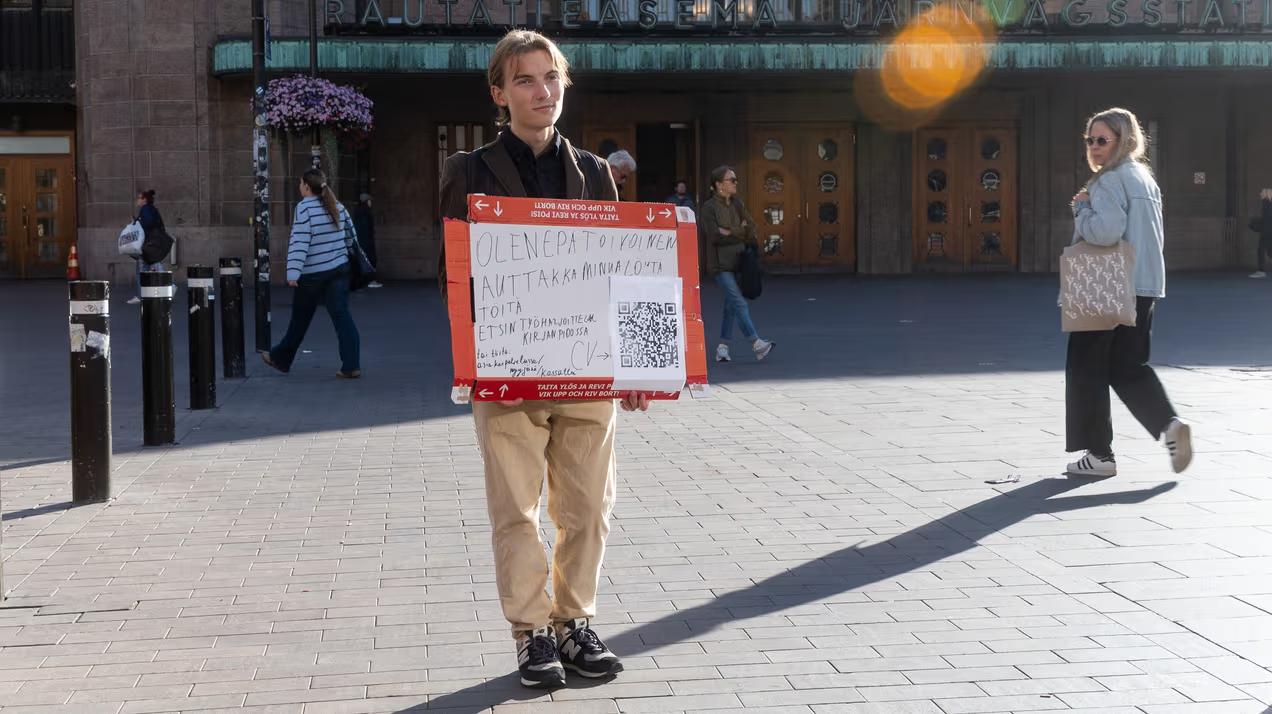
For 21-year-old business student Serhii Denichenko, the search has lasted more than 18 months.
After repeatedly contacting potential employers without success, Denichenko decided to try something different. Earlier this month, he stood in central Helsinki holding a sign asking for an internship. He had seen similar attempts in other countries and decided to take the idea to the streets of the Finnish capital.
“People usually stand on the street asking for money, but I decided to ask for a job,” he said.
The response from passers-by was mixed but often encouraging. Some people stopped to speak with him. Others offered contact details for employers or photographed his sign. But the attention did not translate into an internship.
One company showed some interest before eventually turning him down after learning that Denichenko was studying for a vocational qualification rather than attending a university or other higher-education institution.
He is particularly interested in bookkeeping, but finding an opportunity in the field has proved difficult.
“Companies have told me, ‘I’m sorry, but we don’t need you – not even for free.'”
Denichenko’s experience reflects a wider problem being reported by vocational education providers in Finland. Tarja Koskinen-Nisula, who heads the business studies programme at Omnia, where Denichenko studies, said it has become increasingly difficult for business students to find internships.
The change has been particularly visible among larger employers, she said, and has developed over the past few years.
One reason is the transformation of financial administration itself. Work that once provided straightforward opportunities for students to gain practical experience is increasingly handled by automated systems.
“I tend to talk about automation, but someone else might say that artificial intelligence is taking the jobs,” Koskinen-Nisula told Yle.
Basic accounting work, in particular, has changed considerably. Tasks such as transaction recording are now increasingly automated, leaving fewer routine duties that can be handed to an intern.
At the same time, Koskinen-Nisula said, internships in business are increasingly being offered to students from universities of applied sciences.
That creates a difficult situation for vocational students who need workplace experience as part of their education but are competing in a labour market where employers may be looking for students with a different educational background.
The problem is not limited to business studies.
Kia Wilenius, chair of SAKKI, which represents vocational students in Finland, said students are facing greater difficulties finding internships across several fields. She links the trend to weak employment conditions in Finland and the increasing use of artificial intelligence in workplaces.
The pressure may be particularly noticeable in areas such as communications, marketing and sales, where much of the work can be carried out digitally.
“Internships are difficult to secure for jobs that are largely done online. The situation is different in fields such as care work,” Wilenius said.
For Denichenko, however, the issue is not simply about completing a study requirement. The internship has become a barrier between him and the career he wants to begin.
He arrived in Finland from Ukraine in March 2022 and started studying at Omnia more than two years ago. If he can secure an internship, he expects to complete his qualification within a few months.
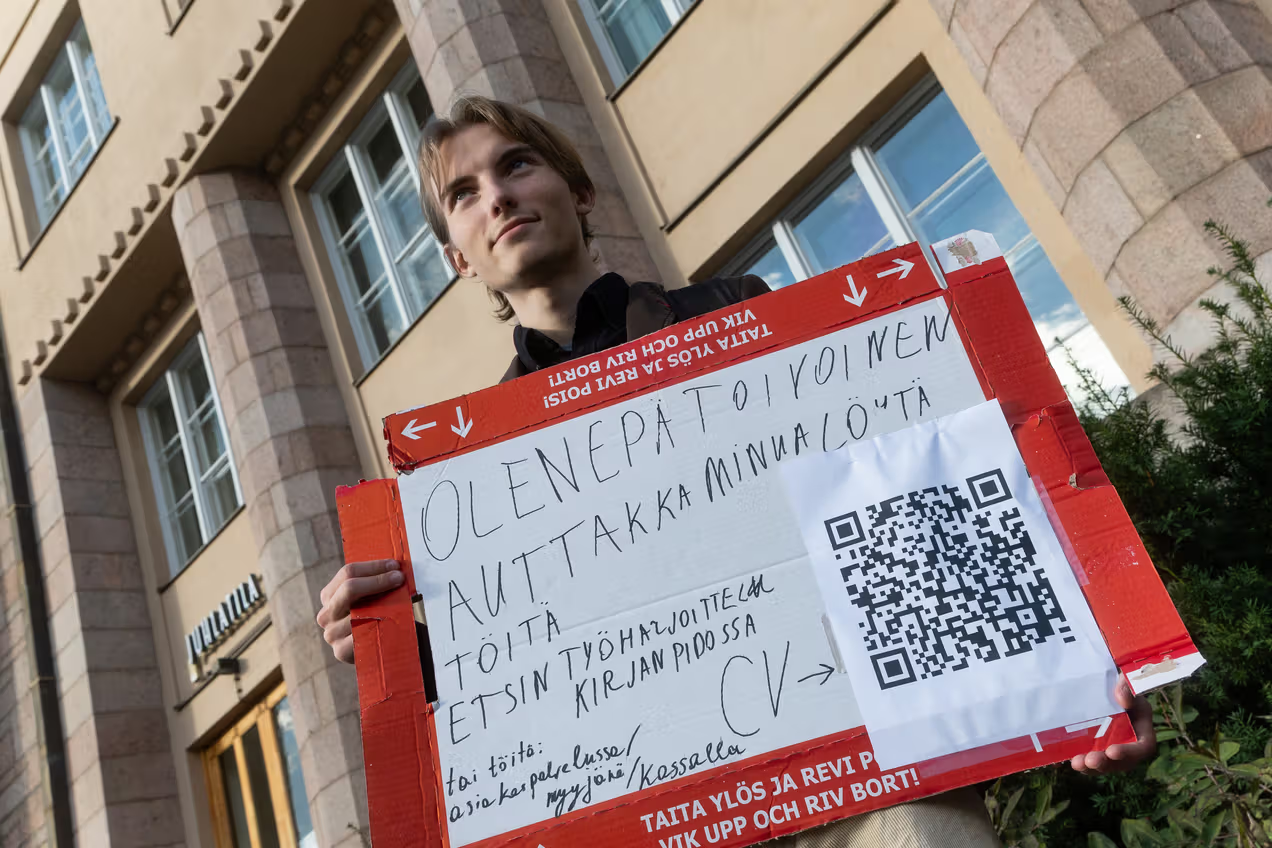
He also believes his Finnish language skills could make a difference. He is continuing to study the language and hopes that becoming more confident in Finnish will improve his chances with employers.
There is also a personal reason why the search matters so much to him.
Denichenko is living in Finland under temporary protection and wants to build a permanent future in the country. He has a girlfriend and friends in Finland and hopes to continue into higher education after completing his current qualification.
What he wants now is an opportunity to begin working rather than relying on financial support.
“I don’t want to depend on Kela benefits. I want to start my career, but the job market isn’t giving me the chance.”
His attempt to find an internship on the streets of Helsinki may have attracted attention, but it also exposed a more difficult reality for students entering the Finnish labour market: having the motivation to work does not necessarily mean there is a workplace ready to give a student that first chance.
Yle Published the original story.