Brazil’s President Luiz Inacio Lula da Silva has told US President Donald Trump that his mandate to govern the United States does not give him the right to impose his will on other countries, as tensions between Brasilia and Washington continue over trade, sovereignty and Brazil’s upcoming presidential election.
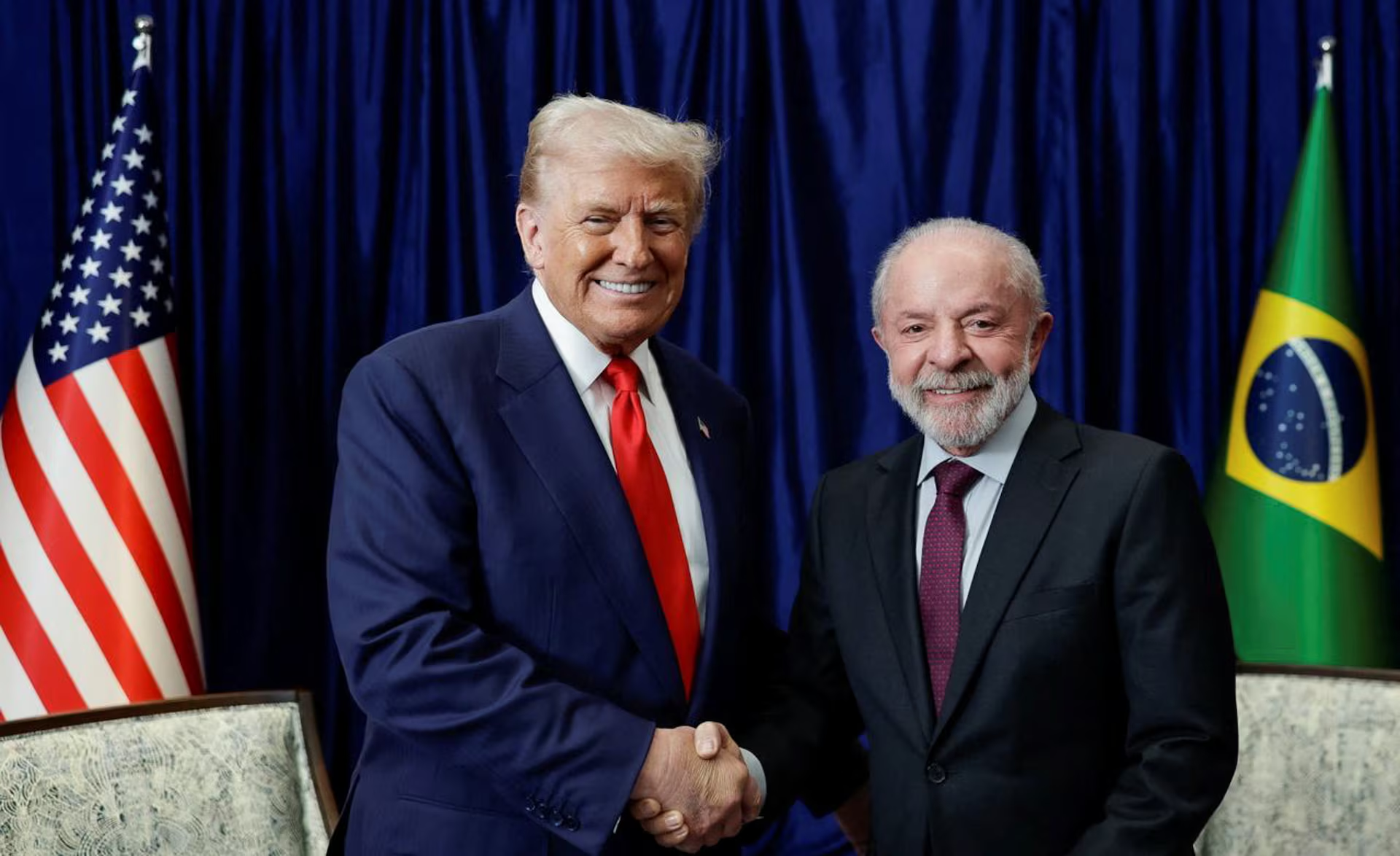
Speaking to CNN’s Christiane Amanpour in New York ahead of the 81st United Nations General Assembly, Lula argued that international relations should be based on respect for national sovereignty and negotiation rather than the power of the strongest country.
“President Trump was elected to be the US president. He has the right to govern the US, but he doesn’t have the right to govern other countries,” Lula said during the interview. He added that Trump should not have the right to impose his will on other nations.
The comments came as Brazil and the United States remain engaged in difficult trade negotiations. Washington has imposed tariffs on Brazilian products, while Lula’s government has been considering whether to use Brazil’s reciprocity law to respond. Lula said Brazil would not apply the measure while negotiations were continuing, but warned that reciprocal action could follow if no agreement is reached.
For Lula, the dispute goes beyond tariffs. He presented it as part of a broader disagreement over how powerful countries should conduct relations with smaller or less powerful nations.
“We don’t want to challenge the US,” Lula said, arguing that every country has the right to protect its own interests and sovereignty. He said Brazil wanted to maintain partnerships with American businesses and with other countries, but would reject attempts by Washington to impose rules on Brazil.
Lula also criticised what he described as Trump’s approach of relying on economic, military and political strength to get other governments to comply. He characterised that philosophy as a “law of the strongest” and said he disagreed with it.
The Brazilian president instead argued for stronger multilateral cooperation, in which disputes are handled through dialogue and negotiations rather than unilateral pressure. That position has been a recurring theme in Lula’s foreign policy messaging, particularly as Brazil seeks to maintain relationships with the United States while also strengthening ties with other major economies.
The dispute has also moved into the political sphere. Brazil is heading toward its 2026 presidential election, and Lula has repeatedly warned against foreign interference in the country’s electoral process. During the CNN interview, he said Brazilian voters should determine Brazil’s political future just as American voters determine the future of the United States.
Lula acknowledged concerns about possible interference but said there was, at that point, no concrete evidence establishing that such interference had taken place. He also said he did not want Brazil interfering in American domestic affairs.
The issue remained prominent in Lula’s subsequent appearance at the United Nations, where he again warned against foreign interference in national elections and defended the sovereignty of Brazil’s democratic institutions.
Despite his criticism of Trump, Lula stopped short of presenting Brazil’s position as opposition to the United States itself. He stressed the importance of the longstanding relationship between the two countries and said Brazil wanted dialogue, negotiations and partnerships rather than confrontation.
That distinction is important as the two governments try to manage disagreements over tariffs while keeping diplomatic channels open. Lula’s message has been that Brazil is prepared to negotiate with Washington, but that negotiations must take place between sovereign governments rather than through one country dictating terms to another.
For now, trade remains one of the clearest tests of that position. Lula has said Brazil will remain at the negotiating table while talks continue, even as his government keeps the reciprocity law available should those discussions fail to produce an agreement.
His broader argument, however, reaches beyond the immediate tariff dispute. Lula is asserting that Brazil can maintain close relations with the United States without accepting what he regards as outside interference in its political decisions or domestic affairs. For a country preparing for another presidential election while navigating a complicated relationship with Washington, that question is likely to remain central to Brazil’s foreign policy debate.