Häkkänen’s Israel visit has triggered a parliamentary dispute in Finland, with Greens chair Sofia Virta saying she will seek a vote of no confidence in Defence Minister Antti Häkkänen over his meeting with Israeli Defence Minister Israel Katz. The controversy centres not only on the meeting itself, but also on who authorised it and what it says about Finland’s wider defence and foreign policy towards Israel.
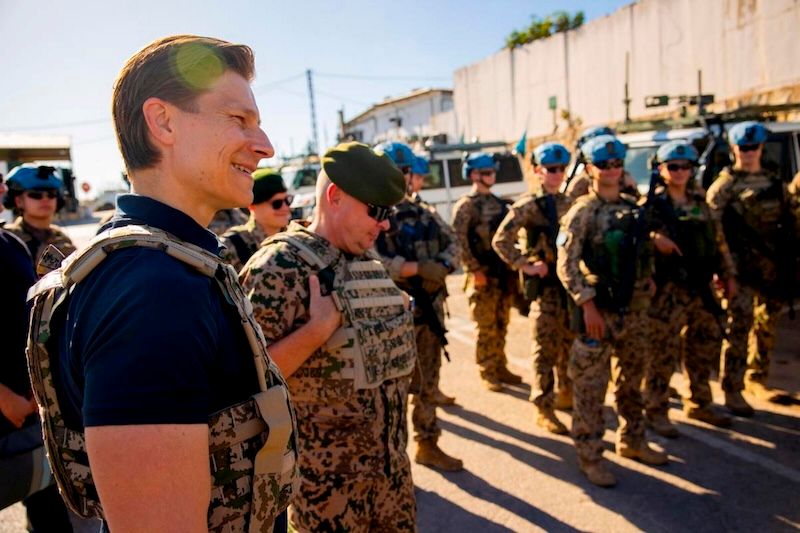
Häkkänen travelled to Lebanon and Israel from 13 to 18 September. In Lebanon, he met President Joseph Aoun, Defence Minister Michel Menassa, commanders of the United Nations Interim Force in Lebanon and Finnish peacekeepers serving with the mission. In Israel, he met Katz, examined the David’s Sling air defence system that Finland has purchased and visited companies involved in supplying equipment to the Finnish Defence Forces. He also received information about Israeli civil defence arrangements.
It was the Israel leg of the trip that quickly became a political issue in Helsinki.
Virta has demanded that the government clarify whether the meeting with Katz was discussed and approved collectively by the government, or whether it was arranged by Häkkänen himself. Häkkänen has now said that the decision to make the working visit and meet Katz was his.
The Greens argue that a meeting between the two defence ministers cannot be treated simply as a technical discussion because of the continuing war in Gaza and the political significance attached to Israel’s government and its conduct there. Virta has questioned whether the meeting is consistent with Finland’s stated emphasis on international law and whether it represents a broader government position towards Israel.
The Left Alliance has said it will support the Greens’ no-confidence initiative, while the Social Democratic Party has been considering its position. Virta has also called on the SDP to join the motion. The dispute therefore has the potential to develop beyond a disagreement between one minister and individual opposition MPs and into a wider parliamentary debate over Finland’s Israel policy.
Left Alliance chair Minja Koskela has separately submitted a written parliamentary question concerning the visit. Among the issues she has raised is whether the government’s approach to defence cooperation with Israel has been considered in relation to Finland’s campaign for a seat on the United Nations Security Council for 2029-30.
Green MP Atte Harjanne has also asked whether the meeting with Katz had the backing of Foreign Minister Elina Valtonen, the government or President Alexander Stubb. His questions come against the backdrop of Finland’s existing defence procurement relationship with Israel, including the David’s Sling system.
Häkkänen has defended the visit on practical defence grounds. He said the main purpose was to ensure that Finland receives the latest updates to the David’s Sling system, including developments resulting from Iran’s missile attacks. He has also argued that defence materiel cooperation with Israel is something Finland has agreed to maintain through its broader foreign and security policy framework.
The Finnish government has presented the trip as part of normal ministerial work. Prime Minister Petteri Orpo has defended Häkkänen, arguing that the visit was connected to Finnish defence interests and to the country’s existing procurement arrangements with Israel.
The David’s Sling programme is particularly relevant to the government’s argument. Finland decided to purchase the Israeli-American air defence system during the previous government, in a deal worth more than EUR 300 million. The purchase was made before the current political dispute over Häkkänen’s Israel visit, although the opposition has continued to question the extent and direction of Finland’s military relationship with Israel.
That relationship has already been under scrutiny in Finland. In August, Yle reported that Finland and Israel had extended a memorandum of understanding covering defence materiel cooperation for another ten years, taking the arrangement through 2034. The memorandum concerns cooperation in areas including research, development and procurement of military equipment. The Defence Ministry did not publicly announce the extension.
Häkkänen has described the memorandum as a normal arrangement between countries involved in defence trade, noting that Finland has similar cooperation documents with a large number of countries. Defence Forces Commander General Janne Jaakkola has also defended cooperation with Israel, saying that Finland can obtain valuable information from Israel’s operational experience, particularly in areas relevant to air and missile defence.
Opposition criticism has focused on the timing and political implications of that cooperation. The Greens and Left Alliance have questioned whether closer defence ties with Israel are compatible with Finland’s positions on the war in Gaza and international law. The renewed controversy over the memorandum has given the latest dispute over Häkkänen’s visit a broader context than the meeting with Katz alone.
The distinction between practical defence cooperation and political signalling is now at the centre of the argument. Häkkänen has presented his meeting with Katz as part of the practical relationship needed to protect Finnish defence interests and manage an existing procurement programme. His critics see a ministerial meeting with Katz as a political act in its own right, particularly given the wider international controversy surrounding Israel’s conduct in Gaza.
That disagreement has also drawn attention to the different strands of Finland’s policy towards Israel. The country continues to maintain defence-related cooperation with Israel while Finnish officials have also participated in international diplomatic efforts concerning the Israeli-Palestinian conflict. The resulting tension has become increasingly visible in domestic politics.
For Häkkänen, the immediate issue is whether his decision to meet Katz can be defended as part of his responsibilities as defence minister. For the opposition, the parliamentary question is broader: whether the government’s defence relationship with Israel represents a deliberate political direction that should be debated and accepted at government level.
The no-confidence initiative will bring those competing interpretations into Parliament. The dispute is therefore no longer simply about a minister’s foreign trip. It has become a debate over how Finland balances defence procurement, security cooperation, diplomatic policy and its stated commitment to international law when dealing with a country at the centre of one of the world’s most contested conflicts.