Earl Spencer claims King Charles sounded “giddily elated” in a telephone conversation following the death of Princess Diana, describing the reaction as resembling that of a “lottery winner” rather than someone grieving the loss of his former wife.
The allegation appears in Spencer’s forthcoming memoir, “Swan Song: Diana, My Sister”, which examines his relationship with Diana and his recollections of the events surrounding her death in Paris in August 1997. Excerpts from the book have been published by the Daily Mail.
Spencer recalls speaking with Charles, then the Prince of Wales, in the hours after Diana died in a car crash. He writes that the tone of the conversation stood out to him because it appeared markedly different from the reactions of others who contacted him.
“Unlike my other callers, who were stunned, barely able to articulate their condolences and offers of help, he sounded giddily elated – like a lottery winner, I remember thinking at the time,” Spencer writes.
He also describes Charles as sounding “strangely matter-of-fact” given the circumstances. During the conversation, Spencer says, Charles discussed how he intended to tell his sons, Prince William and Prince Harry, that their mother had died. The princes were 15 and 12 respectively and were staying at Balmoral at the time.
Spencer goes further in the memoir, offering his own interpretation of what may have been behind Charles’s reaction. He suggests that the prince may have immediately thought about what Diana’s death could mean for his relationship with Camilla Parker Bowles, whom he later married.
“Looking back now, I suspect the prince’s first reaction must have been to think more of how this event might free him to marry the woman he loved, rather than appreciating the loss of one he did not,” Spencer writes.
That interpretation remains Spencer’s personal recollection and retrospective assessment of Charles’s state of mind. There is no independent evidence establishing what Charles was thinking during the conversation described in the memoir.
Buckingham Palace has responded to the allegations by questioning the reliability of memories formed during periods of profound grief, while maintaining its general position of not commenting on books.
“While we do not comment on books as a matter of principle, His Majesty is mindful that the pain of fraternal grief can cloud reason, affect judgment and colour memory in ways others do not recognise, even many years after such a loss,” a palace spokesperson said.
Spencer’s account also revisits one of the most controversial decisions surrounding Diana’s funeral: whether her two young sons should walk behind their mother’s coffin during the procession.
According to the memoir, a senior palace aide told Spencer that William and Harry were expected to take part. Spencer says he immediately objected, telling the aide, “That’s not going to happen.”
He later describes a telephone conversation with Charles in which the then prince defended the idea by referring to his own experience of walking behind the coffin of his great-uncle, Lord Mountbatten, after Mountbatten was assassinated in 1979.
Spencer recalls pointing out that Charles had been 30 when he took part in that procession, while William and Harry were children dealing with the death of their mother.
According to Spencer, the disagreement escalated. He writes that Charles questioned the Spencer family’s “sense of duty” and continued speaking angrily before appearing to pause.
Spencer says he initially believed Charles was trying to regain his composure. Instead, he alleges, the prince made a remark about Diana that Spencer interpreted as revealing deep resentment toward her and toward the public response to her death.
“Rest assured,” Spencer quotes Charles as saying, “we’ll forget her soon enough!”
Spencer says he ended the call immediately.
The memoir also recounts objections from members of Spencer’s family to the proposed procession. Spencer quotes his uncle as saying: “They can’t make these boys walk behind their mother’s coffin! It’s barbaric.”
William and Harry ultimately did walk behind Diana’s coffin on September 6, 1997, alongside Charles, Spencer and Prince Philip. The decision has remained one of the most emotionally debated moments of Diana’s funeral, particularly because of the ages of her sons.
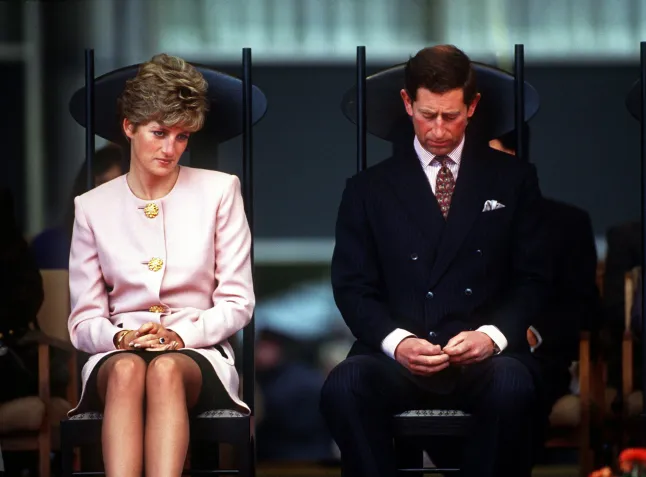
Diana’s relationship with Charles had already been deeply strained by the time she died. The couple separated in December 1992, after years of intense public scrutiny of their marriage, and their divorce was completed in August 1996.
Their relationship became the subject of further public discussion after Diana’s 1995 BBC interview with Martin Bashir, during which she famously said there were “three of us in this marriage”, referring to Charles’s relationship with Camilla.
Diana’s death, and the extraordinary public reaction that followed, transformed the atmosphere around the British royal family. Spencer’s new memoir now revisits those events from the perspective of someone who was not only Diana’s brother but also directly involved in decisions surrounding her funeral.
The allegations about Charles’s private conversations, however, remain Spencer’s account of events almost three decades after Diana’s death. Buckingham Palace has not issued a point-by-point response to the conversations described in the memoir.