EU associate membership for Canada is being proposed for the first time after European Commission President Ursula von der Leyen invited Canada to become the European Union’s first associate member.
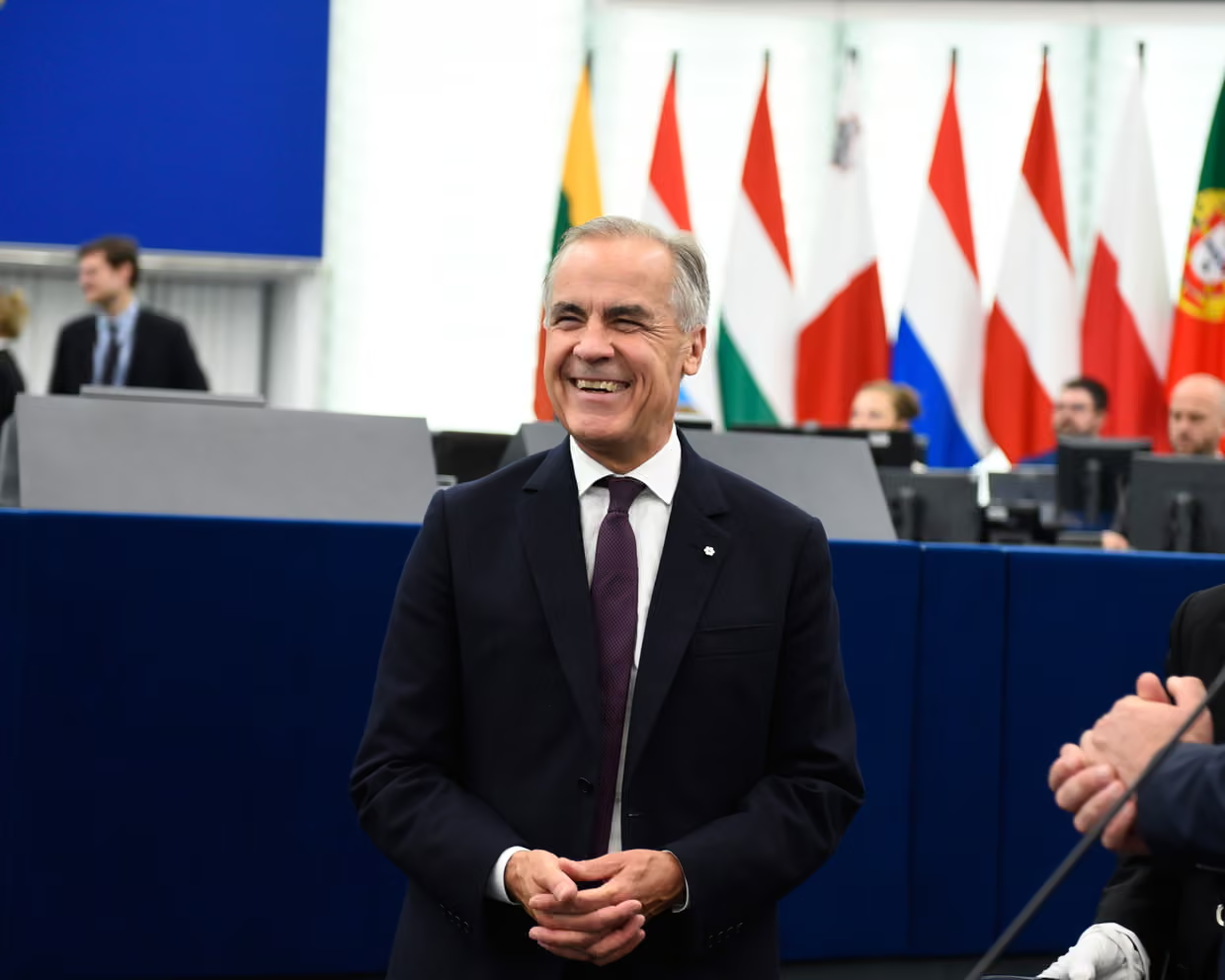
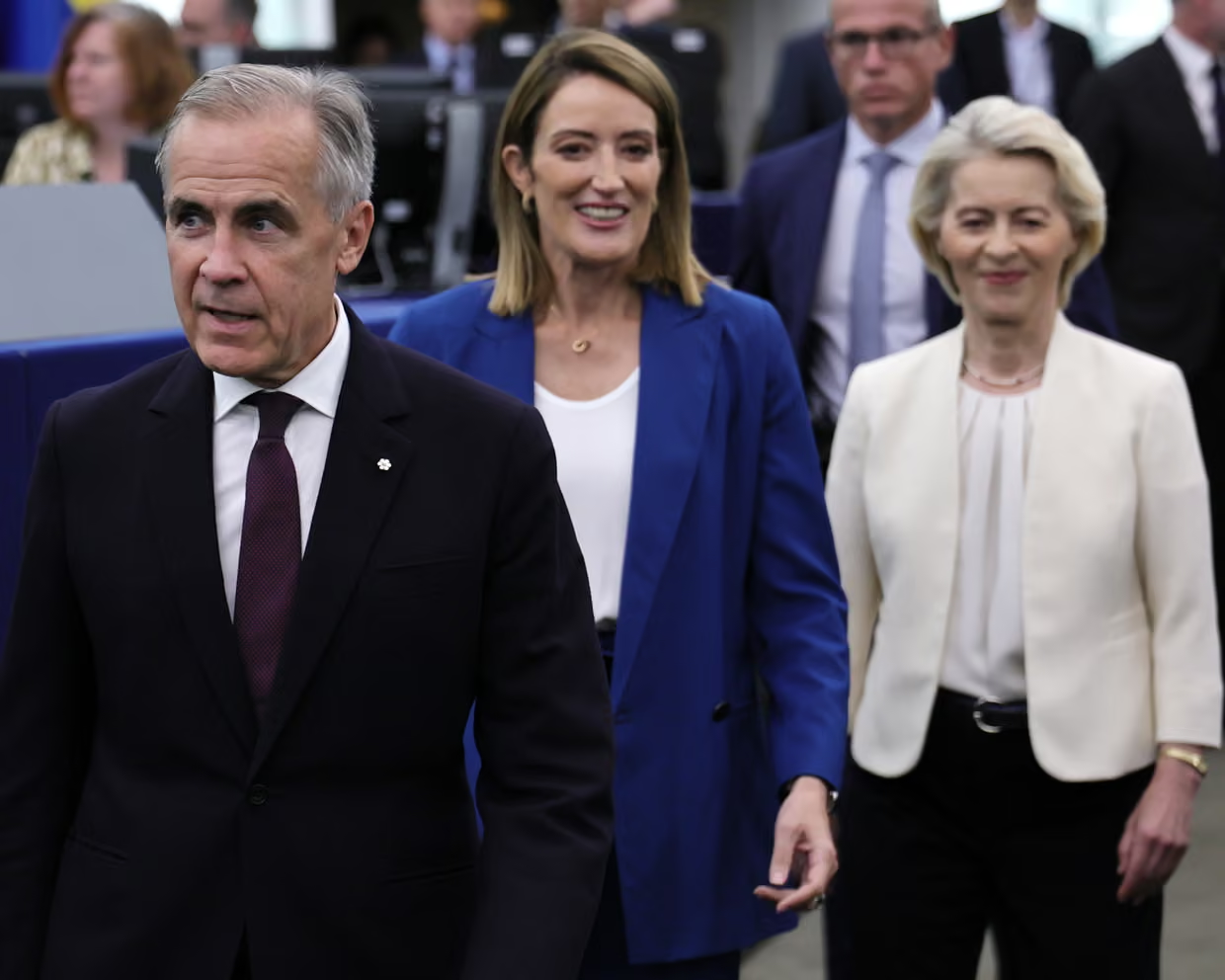
She made the proposal on Wednesday during the European Parliament’s State of the Union debate in Strasbourg, with Canadian Prime Minister Mark Carney present.
Von der Leyen said the EU and Canada share similar views on democracy and major international issues, including artificial intelligence, climate change, the war in Ukraine, the Arctic and geopolitics. She said Europe wants to take its relationship with Canada to the highest possible level and work towards a new form of partnership.
The proposal does not mean Canada is being offered full EU membership. Instead, von der Leyen suggested creating an associate membership arrangement, although the EU has not yet explained exactly what that status would involve. The European Commission had previously acknowledged that there was no existing associate membership model for Canada or another country.
The idea comes as Canada and the EU are already moving towards closer cooperation. The two sides have an existing trade agreement, known as CETA, and von der Leyen said trade in goods between them has increased by 75% in less than a decade. She now wants to move beyond the existing agreement and build what she called an “Alliance for the Future”.
The proposed partnership could cover a wide range of areas. Von der Leyen mentioned technology, defence industries, energy, critical minerals, batteries, artificial intelligence, quantum computing, cybersecurity and economic security. She also proposed making cooperation in the Arctic a major joint project.
For Canada, closer ties with Europe come as the country looks to strengthen relationships outside the United States. Carney has been seeking a closer economic partnership with the EU, describing Canada and Europe as natural partners with shared values.
The proposal also raises practical questions inside Europe. The EU has 27 member states, but it has never had an official category called “associate member”. Countries such as Norway, Iceland and Switzerland have close economic relationships with the EU without being members, but their arrangements are based on different agreements.
That means the details of Canadian associate membership would still have to be worked out. Questions include how closely Canada would be connected to the EU single market, which EU rules it might follow and what rights or obligations would come with the new status.
The timing is also significant. Canada and the EU are scheduled to hold a summit on 29 and 30 October, where the future of their relationship is expected to be discussed. The European Commission had already described Canada as a strategically important partner before von der Leyen made her associate membership proposal.
Von der Leyen’s announcement therefore opens a new conversation rather than creating a new EU membership category immediately. For now, Canada has been invited to help develop a closer relationship with the bloc, while the exact meaning and legal structure of “associate member” remain to be negotiated.