Great Pyramid researchers are examining a new theory that the dimensions of the Great Pyramid of Giza may have been deliberately designed to preserve mathematical and astronomical knowledge in stone.
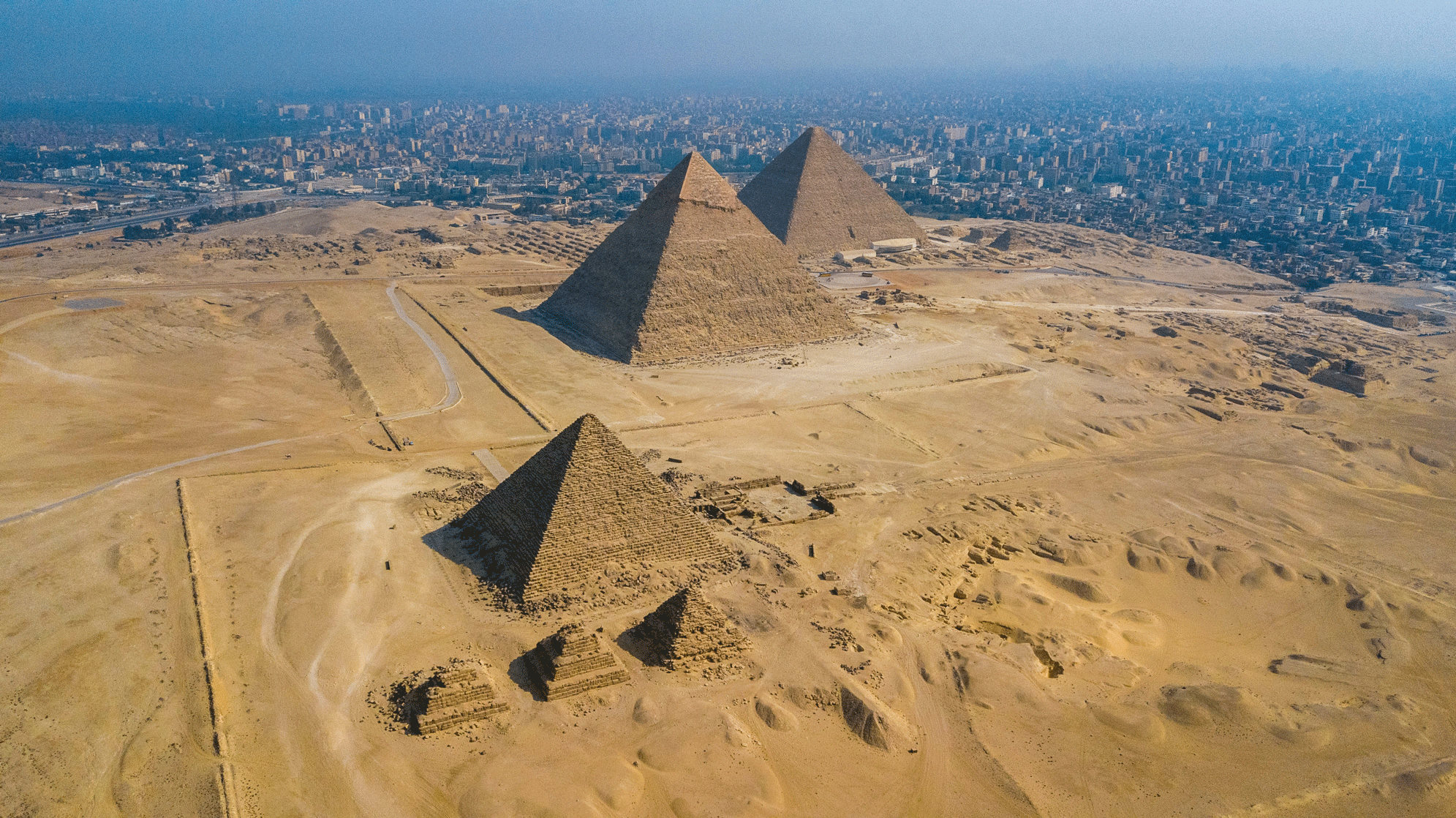
The proposal comes from independent researcher Sefy Levy, whose paper, “The Pyramid as Memory Hypothesis“, was published in August but has not been peer reviewed. Levy argues that measurements of the pyramid’s height, base, sloping sides and overall proportions can be combined in ways that produce numerical values resembling astronomical cycles and mathematical constants.
The central idea is that the Great Pyramid may have served a purpose beyond its physical and religious role: it could have been designed as a durable record of knowledge that would survive long after the civilization that created it had disappeared.
“The pyramid was not built to last forever because it contained something valuable…it was because it was something valuable,” Levy wrote, describing the monument as “the knowledge…made stone”.
Among the calculations highlighted in the theory is a figure of 27.5, which Levy says is close to the roughly 27.55-day period associated with the Moon reaching its closest point to Earth. He arrives at the number by examining the pyramid’s dimensions and applying fractions that were known to have been used by ancient Egyptians.
Levy also identifies a figure of 70 and proposes that it could relate to the period between the heliacal setting and rising of Sirius, the brightest star visible in Earth’s night sky. Other calculations, he argues, produce numbers that resemble recurring cycles associated with planets such as Venus and Jupiter.
The pyramid’s proportions are also presented as being close to mathematical values including pi and the golden ratio. Such relationships have long attracted attention because of the remarkable geometry of the Great Pyramid, but the presence of mathematical patterns alone does not establish that its builders intentionally encoded astronomical information into the monument.
That distinction is important. Levy’s interpretation remains a hypothesis, rather than an established explanation of the pyramid’s design. Without independent testing and peer review, the numerical relationships he identifies cannot be treated as proof of an intentional mathematical code.
His argument extends beyond measurements and into ancient Egyptian religious traditions. Levy draws on the creation traditions associated with Heliopolis, where the beginning of the world was described as a dark and limitless body of water called Nun. From this primordial water, a sacred mound known as the benben emerged. The creator god Atum was then said to have brought himself into existence from the mound.
Levy proposes that the pyramid form may have represented this primordial mound, giving the monument a symbolic connection to one of the oldest Egyptian creation traditions.
He has also suggested a more distant geographical possibility. According to his theory, the shape of the pyramids could have been inspired by an ancestral landscape that he associates with the Eye of the Sahara in present-day Mauritania.
The idea is that communities may once have occupied the region before changing environmental conditions and declining water supplies encouraged migration eastward toward the Nile. If that interpretation were correct, Levy suggests, later generations may have incorporated memories of an ancestral homeland into the monuments they built.
That part of the theory is also unproven, and it adds another layer to a hypothesis that is already based on interpreting patterns rather than establishing a direct historical record of the builders’ intentions.
The Great Pyramid, also known as the Pyramid of Khufu, continues to generate competing theories because its construction, engineering and symbolism remain subjects of intense study. Recent research has approached the monument from a very different direction, focusing not on hidden mathematical messages but on how its enormous stone structure could have been physically built.
One study published earlier this year proposed that workers may have used a multi-channel ramp system incorporated into the pyramid’s edges. The researchers suggested that a spiral arrangement of ramps could have allowed construction teams to move materials upward while the structure was gradually completed and the ramps were subsequently covered.
The contrast between these approaches illustrates why the Great Pyramid continues to attract such sustained scientific and historical attention. Researchers are still investigating both the practical methods that made its construction possible and the ideas that may have shaped its extraordinary design.
For now, Levy’s mathematical interpretation remains an intriguing proposal rather than a confirmed discovery. The numerical similarities he identifies may eventually contribute to a broader understanding of how ancient Egyptians approached mathematics, astronomy and monumental architecture, but establishing that the numbers were deliberately encoded will require evidence beyond the patterns themselves.
What makes the theory noteworthy is not that it has revealed a proven secret inside the Great Pyramid, but that it offers another question about why its builders chose the dimensions and proportions they did. More than 4,000 years after the monument was constructed, those decisions continue to invite investigation.