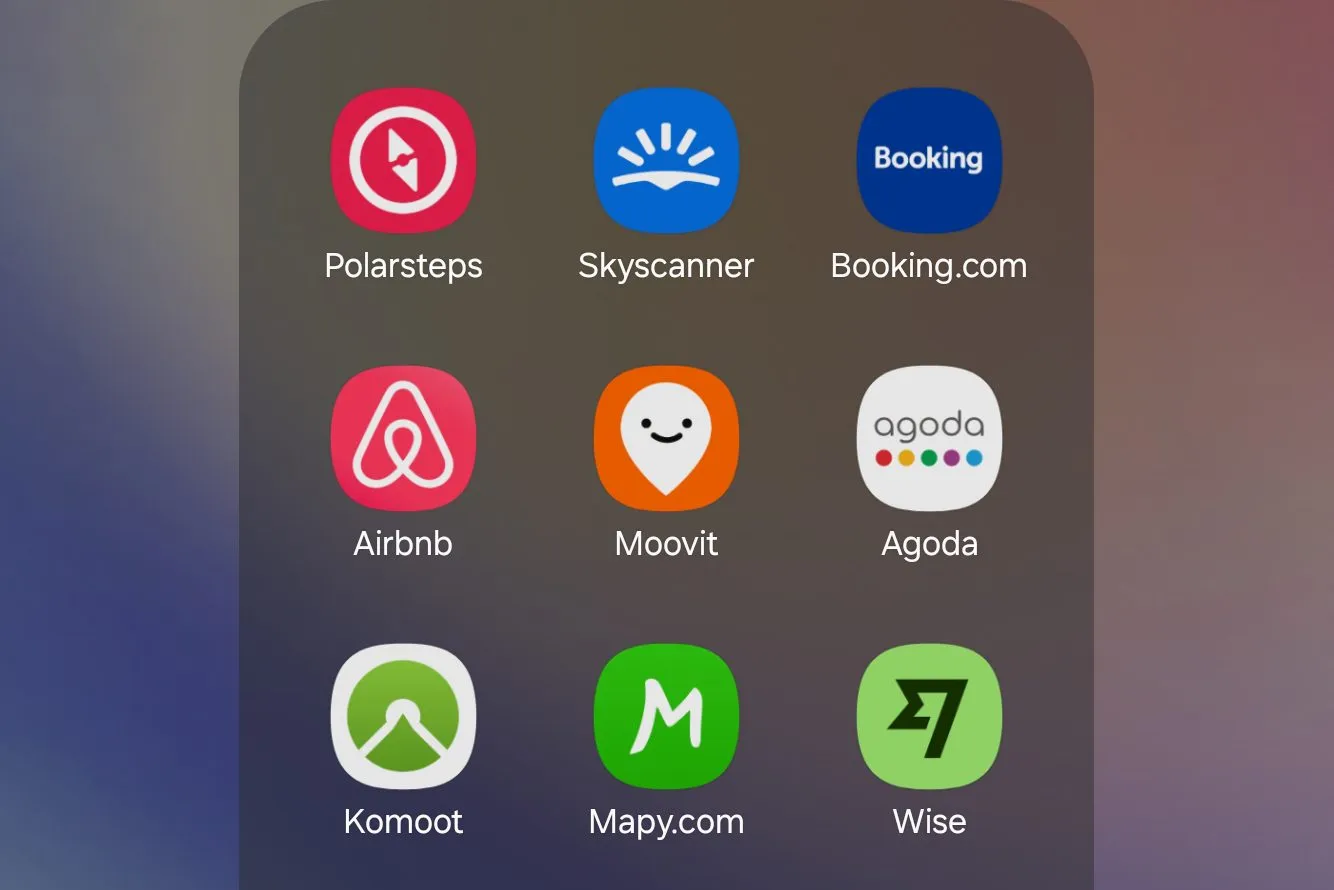

Best travel apps are often discussed as convenience tools, but that framing misses the more accurate reality. They now function as the decision layer of travel itself. Not support tools. Not accessories. Decision infrastructure.
What matters is not how many apps exist, but how a small set of them quietly governs movement, pricing behavior, timing, and even risk perception across borders. The modern traveler rarely notices this shift because it did not arrive as disruption. It arrived as convenience.
And convenience rarely announces its consequences.
The consolidation problem no one talks about
Travel used to require distributed judgment. You compared paper maps, airline offices, hotel desks, and local advice. Each source had its own bias, and travelers learned to negotiate contradictions.
Now that contradiction has been compressed into ranked interfaces.
A few platforms dominate discovery. A few apps dominate routing. A few systems dominate payment. The result is not just efficiency. It is consolidation of perception.
The traveler sees fewer possibilities than actually exist, but sees them more clearly than ever before.
That trade-off defines the entire ecosystem of modern travel apps.
Navigation apps are no longer about directions
Google Maps is often treated as a utility, but that understates its role. It is the default spatial interface for most travelers on Earth.
It does not simply guide movement. It defines what movement feels reasonable.
Transit options are ranked. Walking times are normalized. Businesses are filtered through visibility systems that combine location data, reviews, and engagement signals.
The implication is subtle. Travelers no longer construct mental geography first. They outsource it.
Even offline map tools like Maps.me function less as independent systems and more as emergency extensions of a dominant mapping logic.
Navigation is no longer something you do. It is something you follow.
Flight and transport apps have turned pricing into behavior analysis
Flight comparison tools like Skyscanner and Google Flights are often described as search engines. That description is incomplete.
They are volatility trackers.
Prices are not presented as static values but as shifting patterns influenced by demand curves, route competition, and behavioral prediction models. What travelers interpret as “cheap” or “expensive” is often just timing within an algorithmic cycle.
Rail and bus aggregators like Rome2Rio extend this into multimodal logic. The question stops being “what is the route” and becomes “what combination of systems produces the least friction.”
Travel planning becomes systems thinking without most users realizing it.
Translation apps have changed the tempo of interaction
Language used to slow travel down in a very specific way. It forced pauses. Interpretation. Uncertainty.
Apps like Google Translate compress that delay into seconds.
Camera translation removes the need for linguistic decoding in menus, signs, and documents. Conversation mode removes the hesitation in basic human exchange.
What changes is not comprehension alone. It is speed of decision-making in unfamiliar environments.
That speed has a secondary effect. It reduces reliance on context. Travelers act earlier, with less waiting for confirmation from surroundings.
Currency apps quietly shape spending behavior
Currency tools such as XE Currency appear simple, but they influence perception more than calculation.
When every price can be instantly translated into a familiar baseline, spending stops feeling foreign. That psychological shift matters more than accuracy.
Fintech platforms deepen this effect by removing conversion awareness entirely. Payment happens in the background, not as a conscious step.
Over time, this changes how travelers evaluate value. Not in dramatic ways, but in consistent micro-adjustments that accumulate across a trip.
Accommodation platforms have narrowed discovery without removing choice
Booking.com and Airbnb are often framed as marketplaces. They are more accurately ranking systems layered on top of supply.
What is visible is not neutral. It is filtered through engagement metrics, review velocity, pricing behavior, and conversion probability.
This does not eliminate independent accommodation. It changes how it surfaces.
Discovery becomes algorithmic rather than exploratory. The traveler still chooses, but within a pre-shaped field of visibility.
Itinerary apps exist because fragmentation is now the default
TripIt and similar tools exist for a reason that is often overlooked: travel logistics are no longer centralized.
Flights, hotels, transfers, tickets, and confirmations are distributed across multiple platforms, each with its own interface logic.
Aggregation tools restore coherence, not by simplifying travel, but by reassembling it after fragmentation.
In practice, this becomes less about planning and more about maintaining order during motion.
Safety is now inferred through distributed signals
Traditional notions of travel safety relied on institutions, advisories, and local knowledge.
Modern systems rely on distributed indicators: driver ratings, route transparency, live location sharing, and platform reputation systems.
Ride-hailing apps, in particular, have normalized continuous visibility as a safety condition.
It is not perfect. But it is widely trusted because it replaces ambiguity with structured feedback.
best travel apps do not operate independently. They form a connected system that quietly shapes how travel unfolds in real time.
Navigation determines movement options. Transport apps influence cost perception. Currency tools affect spending thresholds. Translation apps adjust interaction depth. Accommodation platforms filter visibility. Safety systems shape perceived risk.
None of these functions operate in isolation anymore.
Together, they form a continuous feedback loop that influences decisions before travelers consciously recognize they are making them.
This is the defining characteristic of modern travel technology: not control, but structured influence.
The direction this ecosystem is moving toward
The trajectory is not expansion of app categories. It is consolidation of functions.
Navigation, booking, payment, and planning are increasingly merging into unified systems that reduce friction by absorbing complexity internally.
At the same time, regulatory pressure in different regions is pushing against excessive concentration, particularly in transport and accommodation markets.
The result is not one dominant system, but competing integrated ecosystems that behave differently depending on geography and regulation.
What remains consistent is the underlying shift: travel is no longer a sequence of isolated decisions. It is continuous interaction with systems that anticipate and filter those decisions in advance.