Best Study Abroad Destinations for 2030 as Policy, Cost, and Work Rights Collide.
Universities no longer compete only on prestige. They compete on mobility, policy stability, labor access, and how well a student can convert a degree into a life that works. The map of study abroad is shifting quietly but decisively. By 2030, the strongest destinations will not just be academically credible. They will be structurally aligned with migration pathways, industry growth, and social integration.

The countries rising in relevance share a pattern. They are investing in education as export infrastructure, tightening links between universities and employers, and recalibrating visa systems to retain international graduates. Others, long dominant, are under pressure from cost inflation and political uncertainty. Students are noticing.
Rewriting the Geography of Study Abroad
For two decades, the United States, the United Kingdom, and Australia absorbed the largest share of international students. That dominance is not disappearing, but it is being diluted. Tuition costs continue to climb. Housing markets in major cities are strained. Policy signals are inconsistent.
At the same time, mid-sized economies and non-English speaking countries have moved with precision. They have expanded English-taught programs, introduced post-study work rights, and in some cases subsidized tuition. The result is not a sudden shift, but a steady redistribution.
The next phase will be less about brand recognition and more about outcome efficiency. Where can a student study, work part-time, graduate, and transition into a stable job market without friction?
Northern Europe and the Nordic Advantage
Finland, Sweden, and Denmark are positioning themselves as long-term study ecosystems rather than short academic stops. Finland in particular has accelerated investment in applied sciences universities, with a focus on technology, sustainability, and design.

English-taught programs are now standard across many institutions. Tuition remains relatively moderate compared to Anglo markets, and scholarship frameworks are expanding. More importantly, the labor market is accessible. Finland has gradually opened post-study pathways, allowing graduates to remain and seek employment.
The social infrastructure matters. Public transport is reliable. Cities are manageable. Safety is not a selling point here, it is assumed. The friction that often undermines the international student experience is notably lower.
Sweden and Denmark operate similarly, though with higher living costs. Denmark’s industry alignment with green energy and life sciences gives it a distinct edge for certain disciplines.
Germany and Central Europe’s Structural Strength
Germany remains one of the most efficient study destinations globally. Public universities charge minimal or no tuition for many programs, even for non-EU students. That model is unlikely to change significantly by 2030.
The appeal is not only cost. Germany’s industrial base continues to demand skilled labor, particularly in engineering, manufacturing, and IT. The government has already signaled a willingness to simplify immigration rules for qualified graduates.
Cities such as Berlin, Munich, and Hamburg offer diverse job markets, though housing shortages are a growing concern. Students who navigate the language barrier gain a substantial advantage. English-language programs are expanding, but integration into the labor market still favors those with German proficiency.
Poland and the Czech Republic are emerging quietly. Lower costs, improving university standards, and EU mobility rights make them viable alternatives, especially for students priced out of Western Europe.
Canada and the Policy Balancing Act
Canada’s reputation as a study destination has been built on openness. Clear post-graduation work permits, pathways to permanent residency, and a relatively inclusive society have made it one of the most attractive options.

However, capacity is being tested. Housing shortages in cities like Toronto and Vancouver have become acute. The government has already introduced caps on international student intake to stabilize infrastructure.
By 2030, Canada’s position will depend on how it manages this balance. If policy clarity is maintained and housing supply improves, it will remain a top-tier destination. If constraints tighten further, students may diversify toward smaller provinces or alternative countries.
Asia’s Education Hubs and Strategic Expansion
Asia is no longer peripheral in the study abroad conversation. Singapore, South Korea, Japan, and increasingly China are investing heavily in international education.

Singapore offers a highly controlled but efficient system. Universities rank among the best globally, and the country functions as a gateway to Southeast Asia’s business environment. Costs are high, but outcomes are strong.
South Korea has expanded English-medium programs and offers competitive scholarships. Its technology sector is a major draw, though cultural adjustment can be significant.
Japan has been slower historically but is now pushing internationalization more aggressively. Government initiatives aim to increase foreign student numbers while improving employment integration.
China’s universities are climbing in global rankings, particularly in STEM fields. Political considerations will shape its attractiveness, but academically, its trajectory is clear.
Ireland and the UK’s Strategic Adjustments
Ireland has become one of the most efficient English-speaking destinations in Europe. It combines access to major multinational companies with a relatively streamlined visa process. The technology and pharmaceutical sectors are particularly strong.
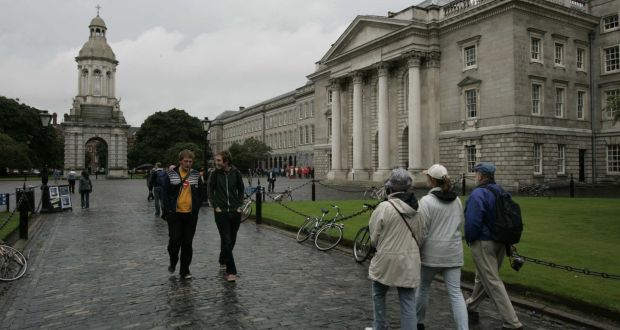
The United Kingdom remains influential, especially for postgraduate education. The reintroduction of the Graduate Route visa has restored some confidence among international students. Still, cost remains a barrier. Tuition and living expenses in cities like London continue to rise.
The UK’s long-term position will depend on policy stability. Sudden shifts in visa rules have historically impacted student confidence.
Australia and New Zealand in Transition
Australia continues to attract large numbers of international students, particularly from Asia. Its universities are well ranked, and its lifestyle appeal is well documented.

Yet policy tightening and cost increases are reshaping its appeal. The government has begun adjusting migration settings to manage population growth. This introduces uncertainty for students who view education as a migration pathway.
New Zealand offers a smaller, more controlled environment. Its institutions are credible, and its visa pathways are generally transparent. The scale is limited, but that can be an advantage for students seeking a quieter experience.
Emerging Destinations Worth Watching
Some of the most interesting movement is happening outside traditional circuits.
The United Arab Emirates is positioning itself as a regional education hub. International branch campuses, modern infrastructure, and proximity to global markets make it attractive, though long-term residency options remain limited.
Portugal and Spain are gaining attention due to lower living costs and improving English-taught programs. Their appeal is lifestyle as much as academic structure, but reforms are underway to strengthen graduate employment pathways.
Turkey and Malaysia continue to attract regional students with competitive pricing and expanding university networks. Their global pull is still developing, but by 2030 they could occupy a more significant space.
What Will Matter Most by 2030
Cost will remain important, but it will not be decisive on its own. Students are increasingly evaluating destinations through a broader lens.
- Policy consistency. Sudden visa changes can undermine an entire system.
- Labor market access. Degrees without employment pathways are losing appeal.
- Language integration. English programs help, but local language skills still shape outcomes.
- Housing and infrastructure. Availability is now a critical factor in destination choice.
- Political climate. Stability and openness influence long-term decisions.
The phrase “Best Study Abroad Destinations for 2030” will carry a different meaning than it did a decade earlier. It will not refer to the most famous universities or the most visited countries. It will refer to systems that function cohesively.
A strong destination will be one where a student can arrive with clarity, move through a program without administrative friction, access part-time work, and transition into a viable career path. That alignment, more than branding, will define the next era of international education.