The Most Beautiful Places on Earth, Where Geography Becomes Experience!
Beauty, in travel, resists consensus. It emerges in specific conditions, at particular hours, and often under constraints that limit access rather than invite it. The places that endure in memory are rarely those that present themselves easily. They demand timing, patience, and an acceptance that not every landscape is meant to be consumed quickly.
What follows is not a catalogue of postcard icons, but a considered selection of environments where geography, climate, and human history intersect in ways that feel structurally complete. These are places where scale, light, and context align with unusual precision.
The Geometry of Ice and Silence
Polar landscapes do not rely on variety. Their authority comes from repetition and scale. In Antarctica, ice extends beyond visual comprehension, forming shelves and ridges that fracture under their own mass. The absence of human infrastructure sharpens perception. Sound carries differently. Distances deceive.
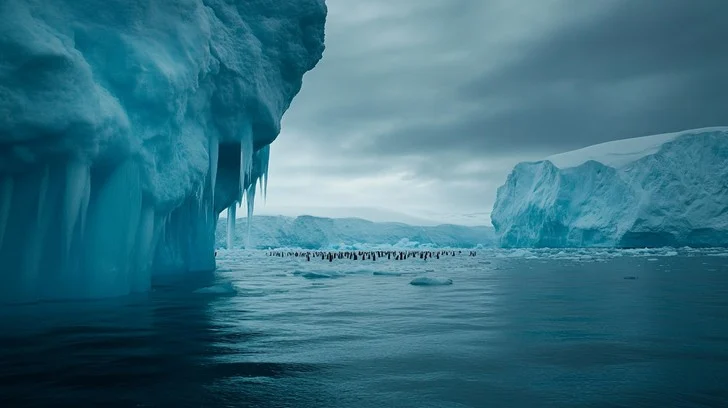
Greenland’s Ilulissat Icefjord offers a more accessible, though still remote, encounter with this geometry. Icebergs break from the Sermeq Kujalleq glacier and drift slowly through a channel that has remained active for millennia. Satellite data confirms the glacier as one of the fastest moving in the world, a detail that underscores the instability beneath the apparent stillness.
These regions are not static. They are among the most sensitive indicators of climate change. Surface melt patterns, calving frequency, and seasonal ice loss are closely monitored by international research teams. Visiting them now carries an implicit awareness that their current form is transitional.
Desert Light and Geological Time
Deserts refine landscapes to their essential elements. In Namibia’s Namib Desert, the white clay pan of Deadvlei contrasts sharply with the surrounding red dunes, some of which exceed 300 meters in height. The skeletal remains of acacia trees, preserved by aridity, create a visual field that feels both ancient and suspended.
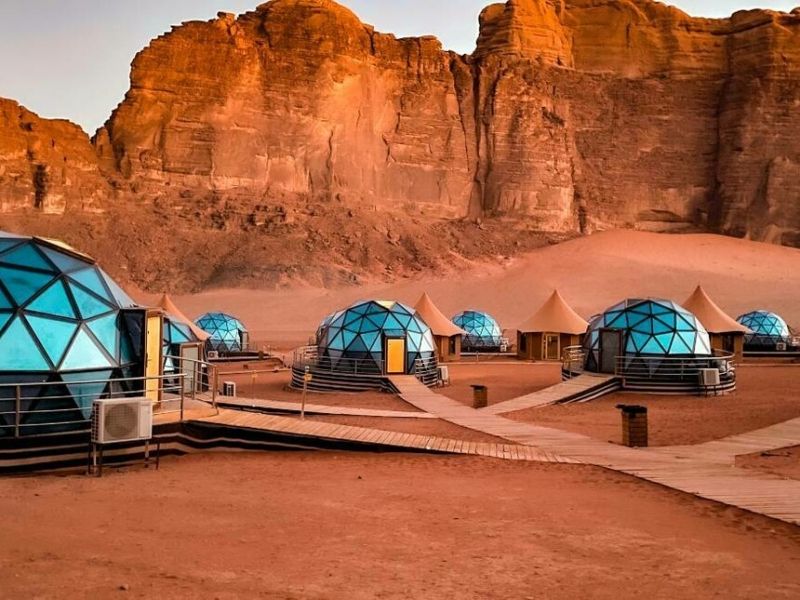
Wadi Rum in Jordan presents a different expression. Sandstone mountains rise abruptly from the desert floor, shaped by wind erosion over millions of years. The region’s cultural layer is equally significant. Bedouin communities have navigated and inhabited this terrain for generations, maintaining a relationship with the land that predates modern tourism.
In Chile’s Atacama Desert, the absence of moisture produces conditions so stable that certain areas have seen no recorded rainfall. Astronomical observatories are positioned here for that reason. The clarity of the night sky adds a vertical dimension to the experience, extending the sense of scale beyond the terrain itself.
Water Systems and Vertical Landscapes
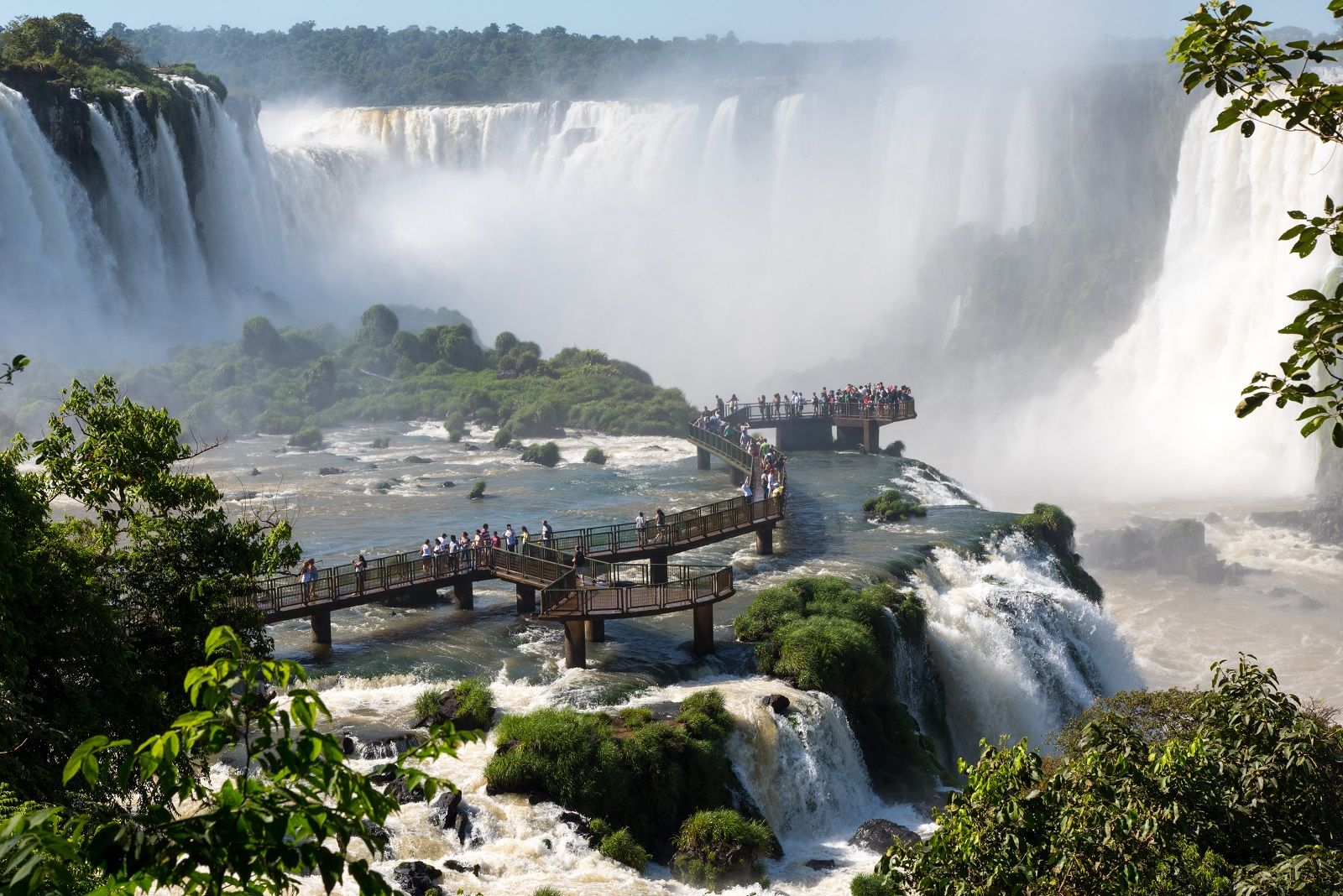
Where water interacts with elevation, landscapes become dynamic. Iguazu Falls, straddling Argentina and Brazil, consists of over 250 individual cascades. The volume of water varies seasonally, but even at lower flow rates the system retains its structural complexity. Mist rises continuously, altering visibility and creating microclimates within the surrounding rainforest.
Norway’s fjords represent a longer geological timeline. Carved by glacial movement, these deep inlets are defined by steep rock walls and narrow waterways. Geirangerfjord, in particular, illustrates how post-glacial rebound and sea level changes have shaped the modern coastline.
In Croatia, Plitvice Lakes demonstrates how mineral deposition can construct rather than erode. Travertine barriers form naturally as calcium carbonate accumulates, creating a network of terraced lakes connected by waterfalls. The system is actively evolving. Paths that exist today may shift as the water redefines its course.
Forest Density and Biological Complexity
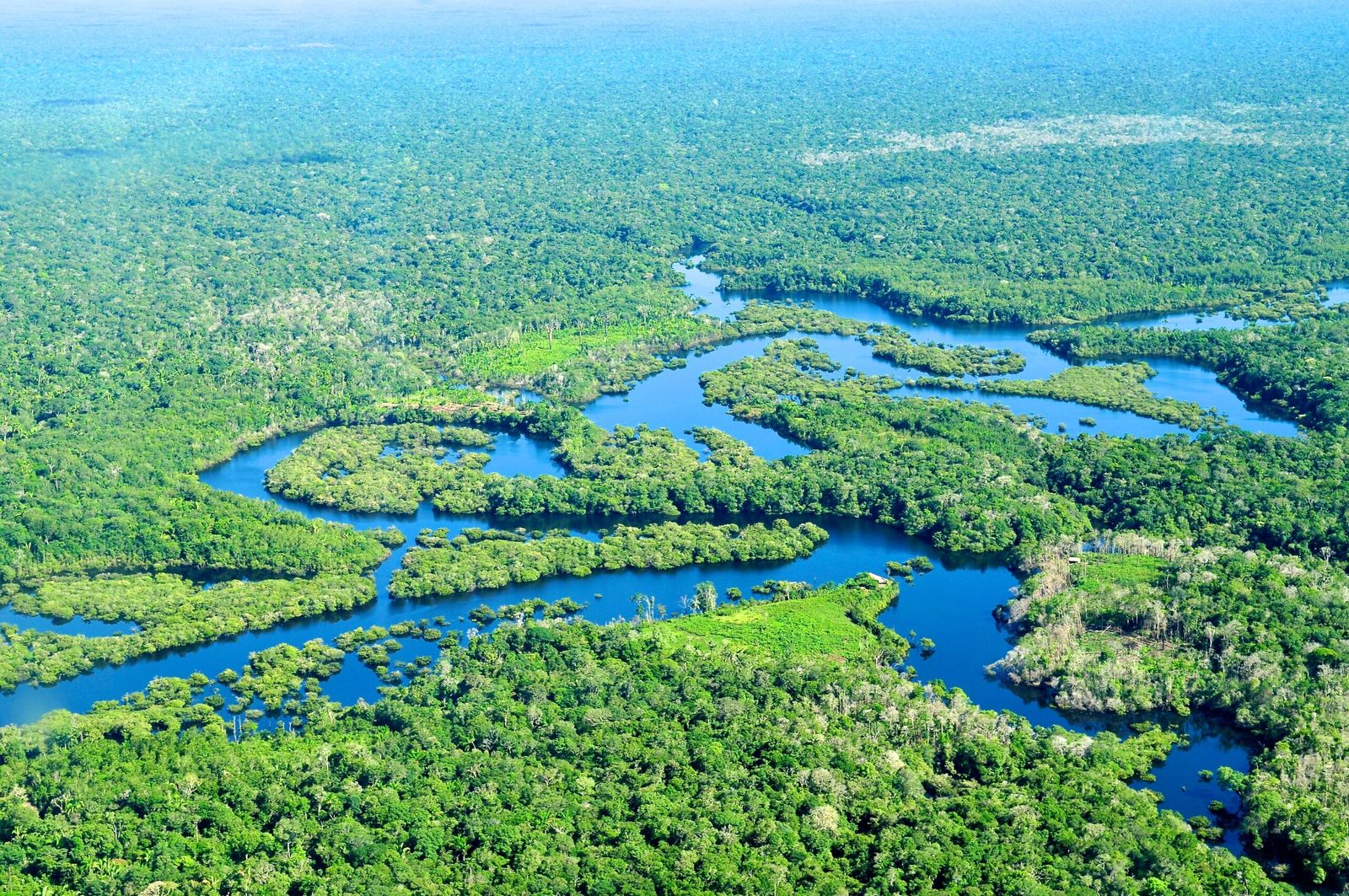
Forests operate on a different register. Their beauty is less immediate and more cumulative. The Amazon Basin contains the largest continuous tropical forest on Earth, spanning multiple national boundaries and hosting an estimated 10 percent of known species. Its river systems function as both transport corridors and ecological lifelines.
In Central Africa, the Congo Basin provides a parallel system with distinct characteristics. Lower levels of deforestation relative to other tropical regions have preserved large tracts of primary forest, though pressures are increasing. Logging, mining, and agricultural expansion are reshaping the margins.
Temperate forests offer another variation. California’s redwood groves introduce vertical scale through biological growth rather than geological uplift. Some trees exceed 100 meters in height, creating a canopy that filters light in precise patterns. The effect is architectural, almost engineered, though entirely organic.
Islands at the Edge of Volcanic Systems
Volcanic islands compress geological processes into visible form. Iceland sits directly on the Mid-Atlantic Ridge, where tectonic plates diverge. Lava fields, geothermal vents, and waterfalls coexist within relatively short distances. The landscape is unfinished in a literal sense, shaped by ongoing eruptions and tectonic shifts.
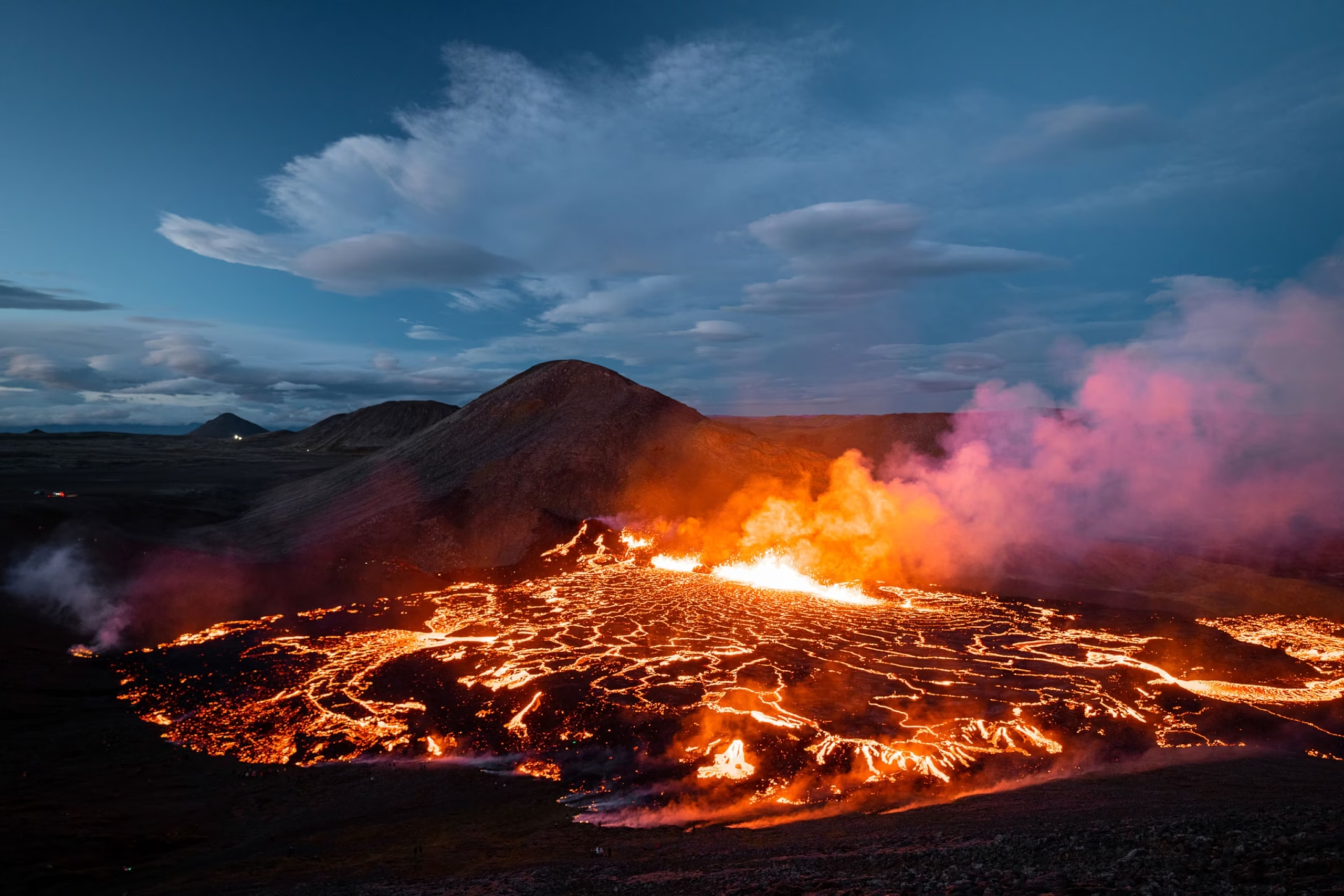
Hawaii’s Big Island presents active volcanism at a different scale. Lava flows from Kilauea have periodically reached the ocean, adding new landmass. These events are monitored closely, both for safety and for their scientific value.
In the Mediterranean, Santorini reflects a historical eruption that reconfigured the island into its current caldera shape. Human settlement adapted to this geography, producing a built environment that mirrors the curvature of the cliffs.
The Azores, located in the North Atlantic, offer a quieter expression. Crater lakes such as Sete Cidades occupy volcanic depressions, creating enclosed ecosystems that contrast with the surrounding ocean.
Cultural Landscapes That Redefine Beauty
Not all beauty is purely natural. Some of the most compelling places on Earth emerge from sustained human interaction with the environment. Machu Picchu integrates agricultural terraces with mountainous terrain in a way that reflects both engineering and ecological understanding.
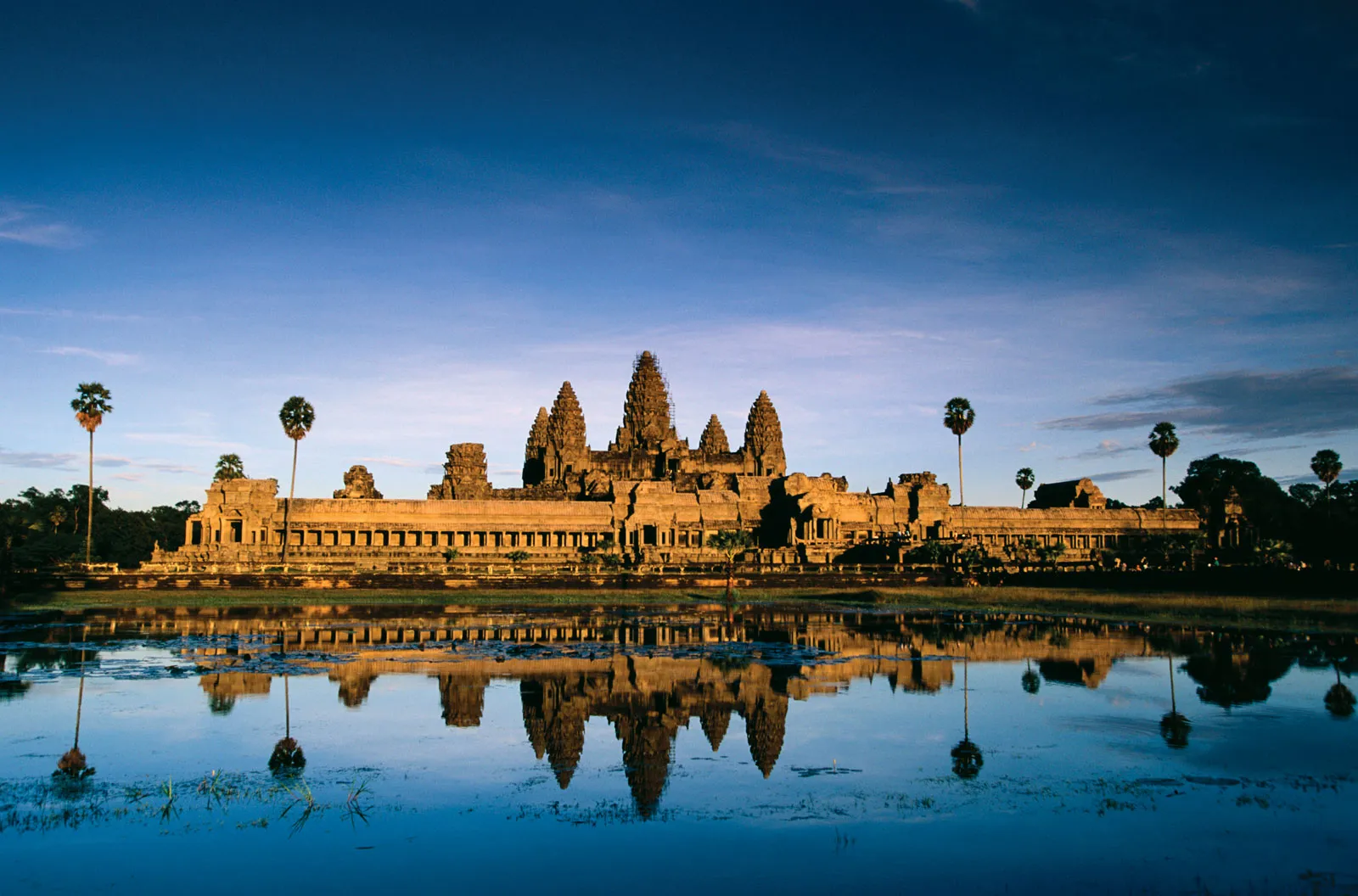
Angkor in Cambodia expands this concept across a broader area. The temple complex is interwoven with water management systems that once supported a large urban population. The scale of coordination required remains a subject of ongoing research.
Petra, carved into sandstone cliffs in Jordan, demonstrates how architecture can be embedded directly into geological formations. The site’s preservation is partly a function of its initial concealment and limited access.
Along Italy’s Ligurian coast, the villages of Cinque Terre illustrate adaptation to steep coastal terrain. Terraced agriculture and compact construction reflect constraints rather than aesthetic intention, yet the result is widely regarded as visually distinctive.
Where the Most Beautiful Places on Earth Resist Simplification
The Most Beautiful Places on Earth do not conform to a single definition. They operate within different systems, shaped by forces that are often invisible at first glance. Their significance lies not only in appearance but in process. Ice moves. Deserts shift. Forests regenerate. Water carves and deposits. Human societies adapt, sometimes successfully, sometimes not.
For the traveler, the challenge is not to identify a definitive list, but to understand the conditions that produce these landscapes. Access, timing, and context matter as much as location. The experience of beauty, in this sense, becomes less about recognition and more about interpretation.