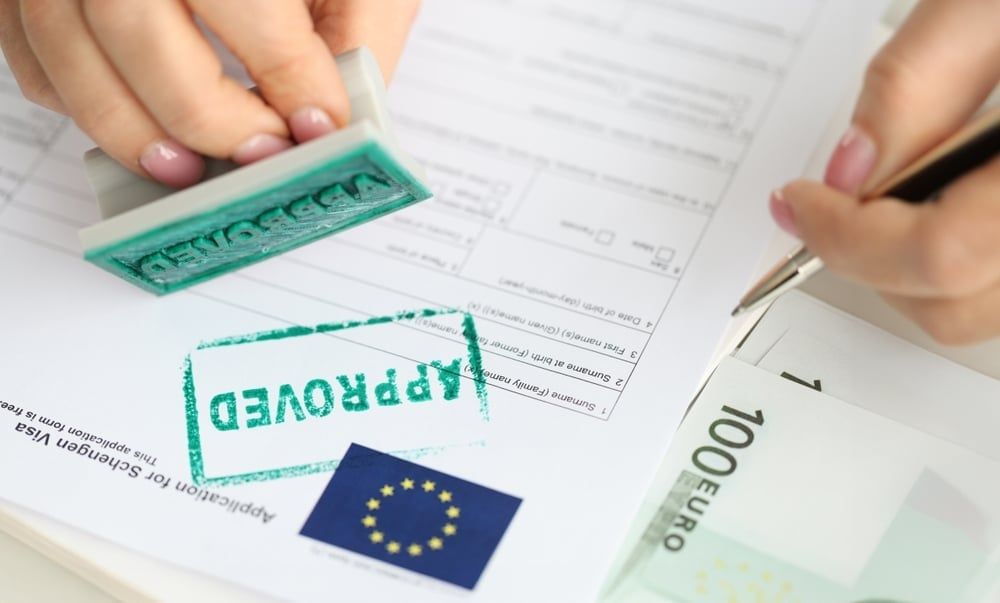
How to Apply for Visas Without a Bank Statement begins with a quiet reality most embassies will not openly state. Financial proof is not about paperwork. It is about risk assessment. A bank statement is only one way to demonstrate that risk is low.
What matters is credibility.
Consular officers are trained to read patterns, not just documents. They look for consistency between your purpose of travel, your personal situation, and your financial capacity. When a bank statement is missing, the application does not collapse. It shifts. The burden of proof moves into other areas that many applicants underestimate.
This is where most visa denials actually happen.
The Logic Behind Financial Proof
Embassies rarely explain their internal logic in public detail, but across Schengen, UK, and North American visa systems, the principle is consistent. Authorities are not verifying wealth. They are verifying stability.
A bank statement works because it shows three things at once:
- Regular income
- Spending behavior
- Access to liquid funds
Without it, those same signals must be reconstructed using alternative evidence. The application becomes more narrative-driven, even if the format remains formal.
When Bank Statements Are Not Available
There are legitimate situations where applicants cannot provide bank statements:
- Cash-based income structures common in parts of Africa, Asia, and informal economies
- New employment with insufficient banking history
- Students or dependents without independent accounts
- Individuals whose accounts are restricted, frozen, or recently opened
Embassies are aware of these realities. What they expect is not perfection, but coherence.
Alternative Proof of Financial Stability
A strong application without a bank statement replaces financial visibility with layered documentation. No single substitute works alone.
Employment and Income Verification
An official employment letter becomes central. It must go beyond confirmation of position. It should include:
- Salary details
- Duration of employment
- Approved leave period
- Company contact information
Pay slips, even in cash-based systems, can carry weight if they are consistent and verifiable. In some jurisdictions, tax records or employer declarations are more persuasive than informal banking activity.
Sponsorship Structures
Sponsorship is often misunderstood. It is not simply a letter from someone willing to “cover costs”. It is a formal financial commitment.
A credible sponsor provides:
- A signed sponsorship letter
- Proof of their own financial capacity
- Identification documents
- Evidence of relationship to the applicant
Embassies evaluate sponsors more strictly than applicants. Weak sponsorship documentation can damage an application more than having no sponsor at all.
Proof of Prepaid Travel
Prepaid arrangements can partially offset the absence of liquid financial proof.
These include:
- Fully paid accommodation
- Return flight reservations or tickets
- Organized tour bookings
- Conference or event registrations
This strategy works because it reduces uncertainty. It shows that major expenses are already covered, narrowing the financial risk profile.
Asset-Based Evidence
Ownership can serve as indirect financial proof. Property documents, business registrations, or long-term leases signal rootedness and economic ties.
This is particularly relevant in countries with high overstay rates, where embassies prioritize evidence of return incentives.
However, assets alone are insufficient. They must align with the travel narrative. A business owner traveling for tourism, for example, should demonstrate operational continuity during their absence.
Writing the Application Narrative
This is where most applicants fail quietly.
Visa applications are often treated as document checklists. In reality, they are structured arguments. When a bank statement is missing, the argument must be explicit.
A well-written cover letter should:
- Acknowledge the absence of a bank statement without defensiveness
- Explain the financial structure clearly
- Connect supporting documents into a coherent story
- Reinforce intent to return
There is no advantage in over-explaining. Precision matters more than volume. Consular officers are reading dozens of files daily. Clarity signals credibility.
Regional Variations in Flexibility
Not all visa systems respond the same way.
Schengen countries tend to allow flexibility if the overall application is consistent. Some member states place more emphasis on sponsorship and travel insurance as risk buffers.
The United Kingdom applies stricter scrutiny. Applications without bank statements often face deeper examination of income sources and personal circumstances.
Canada and the United States operate with layered evaluation models. They rely heavily on interviews or broader background checks, which can compensate for missing financial documentation if the applicant presents a stable profile.
Understanding these differences is not optional. It shapes how the application should be constructed.
Common Mistakes That Trigger Refusals
The absence of a bank statement does not cause most refusals. Inconsistency does.
Frequent issues include:
- Declared income that does not match lifestyle indicators
- Sponsorship letters without verifiable backing
- Employment claims lacking documentation
- Travel plans that appear financially unrealistic
Another common error is overcompensation. Applicants sometimes submit excessive, irrelevant documents in an attempt to strengthen the file. This often creates confusion rather than clarity.
Risk, Perception, and Decision-Making
Visa decisions are not purely technical. They are interpretive.
Consular officers are trained to identify risk signals quickly. When a standard document like a bank statement is missing, attention sharpens. The file is read more critically, not necessarily more negatively.
This creates a narrower margin for error.
Applications that succeed in this context tend to share a specific quality. They are internally consistent. Every document reinforces the same story from a different angle.
Long-Term Strategy for Frequent Travelers
For those who travel often, the absence of a bank statement is rarely sustainable. Over time, establishing a financial record becomes necessary.
However, there are interim strategies:
- Building a documented income trail through contracts and invoices
- Maintaining consistent sponsorship relationships where applicable
- Developing travel history with countries that have less rigid financial proof requirements
Travel history, in particular, becomes a powerful asset. A pattern of compliance reduces perceived risk more effectively than any single document.
The process is not about replacing one document with another. It is about restructuring the application.
Start with your strongest verifiable element. Employment, sponsorship, or assets. Build outward from there. Each additional document should answer a specific question an officer might raise.
Avoid gaps. Avoid contradictions. Avoid assumptions that your situation will be understood without explanation.
Clarity is the only advantage you control.
The Structural Reality
Visa systems are designed for standardization. Applicants who fall outside standard documentation requirements must adapt without appearing irregular.
This balance is difficult but achievable.
The most successful applications without bank statements do not attempt to bypass the system. They work within it, using alternative evidence to meet the same underlying criteria.
That distinction matters. It is the difference between a file that raises questions and one that quietly answers them before they are asked.