

The Iranian women’s football captain has returned home after withdrawing her request for asylum in Australia, marking the fifth member of the national squad to reverse her decision. Zahra Ghanbari will fly from Malaysia back to Iran, according to the state news agency IRNA, a move that has drawn intense attention from human rights groups and media observers alike.
Australian authorities confirmed that another player had withdrawn her asylum application but did not disclose her identity. This comes a day after three other footballers—Zahra Soltan Meshkehkar, Mona Hamoudi, and Zahra Sarbali—also rescinded their bids for protection. Originally, seven members of the Iranian delegation had accepted Australia’s offer of humanitarian visas after reportedly facing pressure at home. Only two players now remain in Australia under asylum.
The initial claims for sanctuary followed concerns over possible repercussions after the team refrained from singing Iran’s national anthem during their opening Asian Cup match. The gesture, widely interpreted as a protest, provoked harsh criticism within Iran and intensified fears for the players’ safety.
Human rights advocates have suggested that coercion may have played a role in the decision to return. Shiva Amini, an exiled former Iranian national futsal player, stated that Iran’s Football Federation, in coordination with the Islamic Revolutionary Guard Corps, had applied persistent pressure on the families of the players. “Several of the players decided to go back because the threats against their families became unbearable and the intimidation was relentless,” she reported on X.
Iranian media framed the returns as acts of loyalty and patriotism. IRNA described Ghanbari as “returning to the embrace of the homeland,” while the semi-official Mehr news agency called her choice a “patriotic decision.” Similarly, the IRGC-linked Tasnim news agency said the returning athletes had resisted “psychological warfare, extensive propaganda and seductive offers” in Australia and were now reuniting with their families.
Australia’s government defended its handling of the situation. Home Affairs Minister Tony Burke emphasized that the government had provided the athletes with every opportunity to secure a safe future. “Australians should be proud that it was in our country that these women experienced a nation presenting them with genuine choices,” he said, adding that the government could not erase the context of the difficult decisions facing the players. Minister Kristy McBain dismissed the Iranian media narrative as propaganda, noting that the Australian authorities had been transparent in their efforts to support the players’ autonomy.
The saga began in early March when the Iranian squad declined to sing the national anthem in their match against South Korea, leading to national outrage and calls for severe punishment. Reports indicate that government officials accompanied the team in subsequent matches, during which the anthem was performed, suggesting a return to compliance under pressure. The team was eliminated from the Women’s Asian Cup shortly after, and the staggered return of players to Iran has continued in the days that followed.
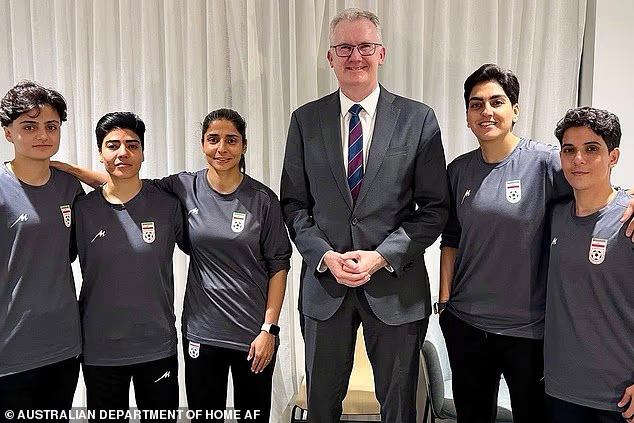
Observers note that this episode underscores the complex intersection of sport, politics, and personal safety. Decisions that might appear simple on the surface—such as seeking asylum—are often entangled with family security, state surveillance, and national expectations. For the Iranian players, returning home may have offered a semblance of safety for their families but has also reignited debates on the limits of personal agency under authoritarian oversight.
The story of Ghanbari and her teammates illustrates a broader dilemma faced by athletes in politically sensitive contexts: the balancing act between global opportunities, personal convictions, and the well-being of loved ones at home. How this episode will influence future interactions between Iranian athletes and international sporting platforms remains a question for human rights organizations, sports authorities, and the global community observing Iran’s social climate.


