Explosion at US embassy in Oslo struck the diplomatic compound in the early hours of Sunday, triggering an immediate police response and a formal investigation into a possible terrorist attack. The blast occurred at approximately 01:00 local time outside the public entrance of the embassy in the Huseby district of the Norwegian capital. No injuries were reported, but the explosion damaged the entrance area, shattering glass and disrupting interior fixtures.
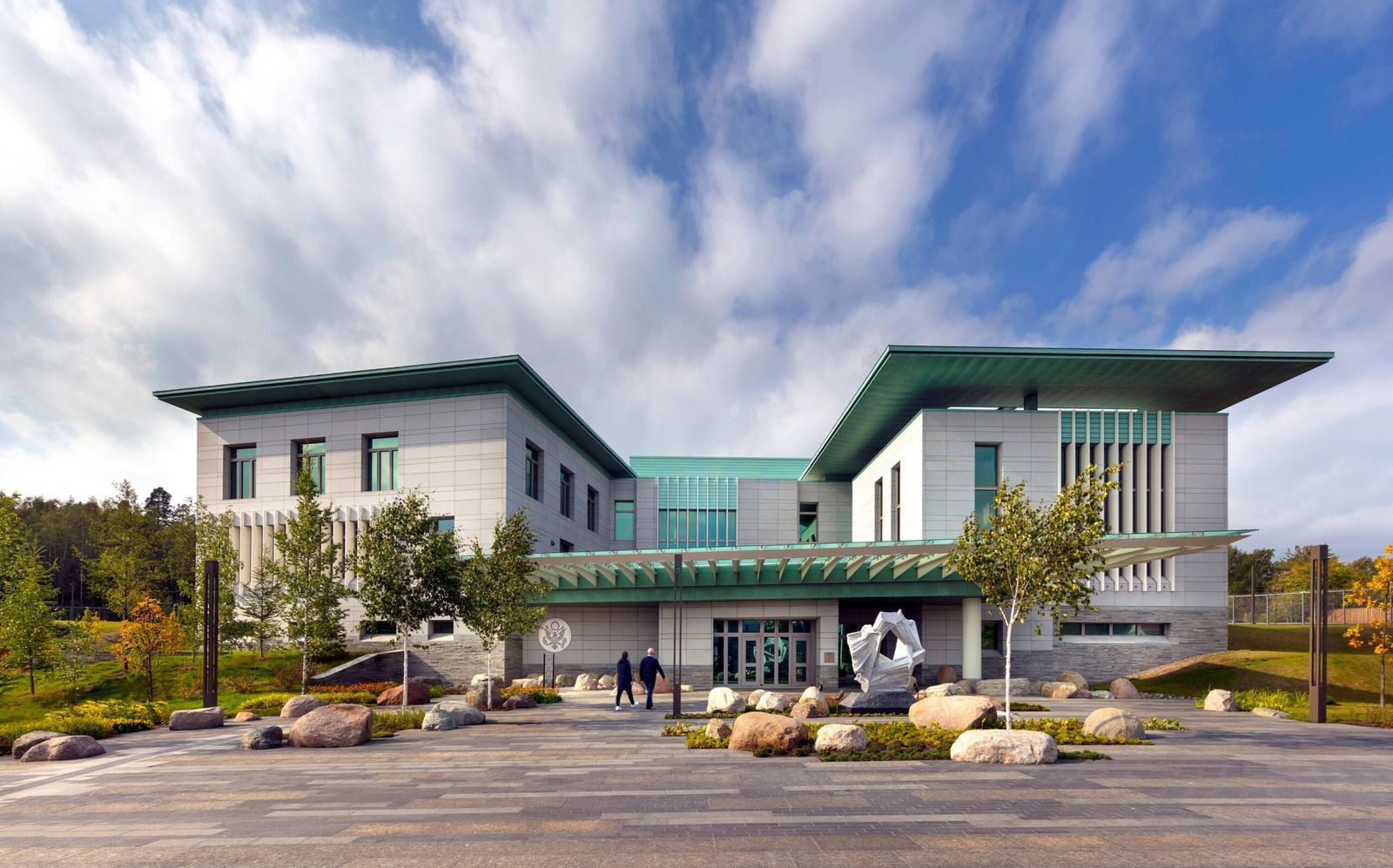
Police quickly secured the scene while forensic teams began examining the site. Photographs from the area showed broken glass scattered across the snow and blackened marks on the tiles inside the building. Authorities said the explosion came from an explosive device thrown toward the embassy. Law enforcement searched the surrounding neighborhood using dogs, drones, and helicopters.
Frode Larsen, head of Oslo police’s joint investigation and intelligence unit, told reporters that investigators are exploring several possibilities. “One of our hypotheses is that this is terrorism,” Larsen said during a press briefing broadcast by NRK. “We must remain open to other causes behind what has happened.”
No suspects have been identified, and police continue searching for any individuals connected to the attack. Officials described the blast as a targeted act aimed at the embassy compound, with the device detonating near the public entrance used by visitors to the consular section.
Michael Dellemyr, who oversees the police response, said authorities know the type of device involved but declined to release further details while the investigation continues. “We have an understanding of what caused the explosion,” Dellemyr told NRK, adding that searches around the embassy grounds revealed no additional danger to residents. Police confirmed that the blast caused limited structural damage.
The US embassy, which relocated to Huseby in 2017, is about seven kilometers from central Oslo. The move from the city center followed decades of operation near the Royal Palace and was partly motivated by security concerns.
Norwegian authorities treated the incident with gravity despite the absence of casualties. The police security service PST joined the investigation and brought in additional personnel overnight. Martin Bernsen, communications adviser at PST, said the agency monitored the situation closely and conducted its own checks. He noted that the national terror threat level remains unchanged at moderate.
Police presence increased around diplomatic and sensitive sites in Oslo following the blast. Authorities confirmed there was no danger to the general public. Large events scheduled in the city, including demonstrations for International Women’s Day, continued under police supervision.
The Norwegian government contacted US officials after the incident. Foreign Minister Espen Barth Eide said he had spoken with the embassy leadership. “The security of diplomatic missions is important to us,” Eide stated. “This act is unacceptable, and authorities are treating the case with seriousness.”