Global stock markets fall as oil prices surge during the US-Israel conflict with Iran, sending a wave of uncertainty through financial markets and raising fears of a wider economic shock tied to energy supply disruptions. Investors across Asia and Europe began the week facing sharp market declines after military strikes by the United States and Israel targeted Iranian infrastructure, intensifying tensions in one of the most important energy regions in the world.
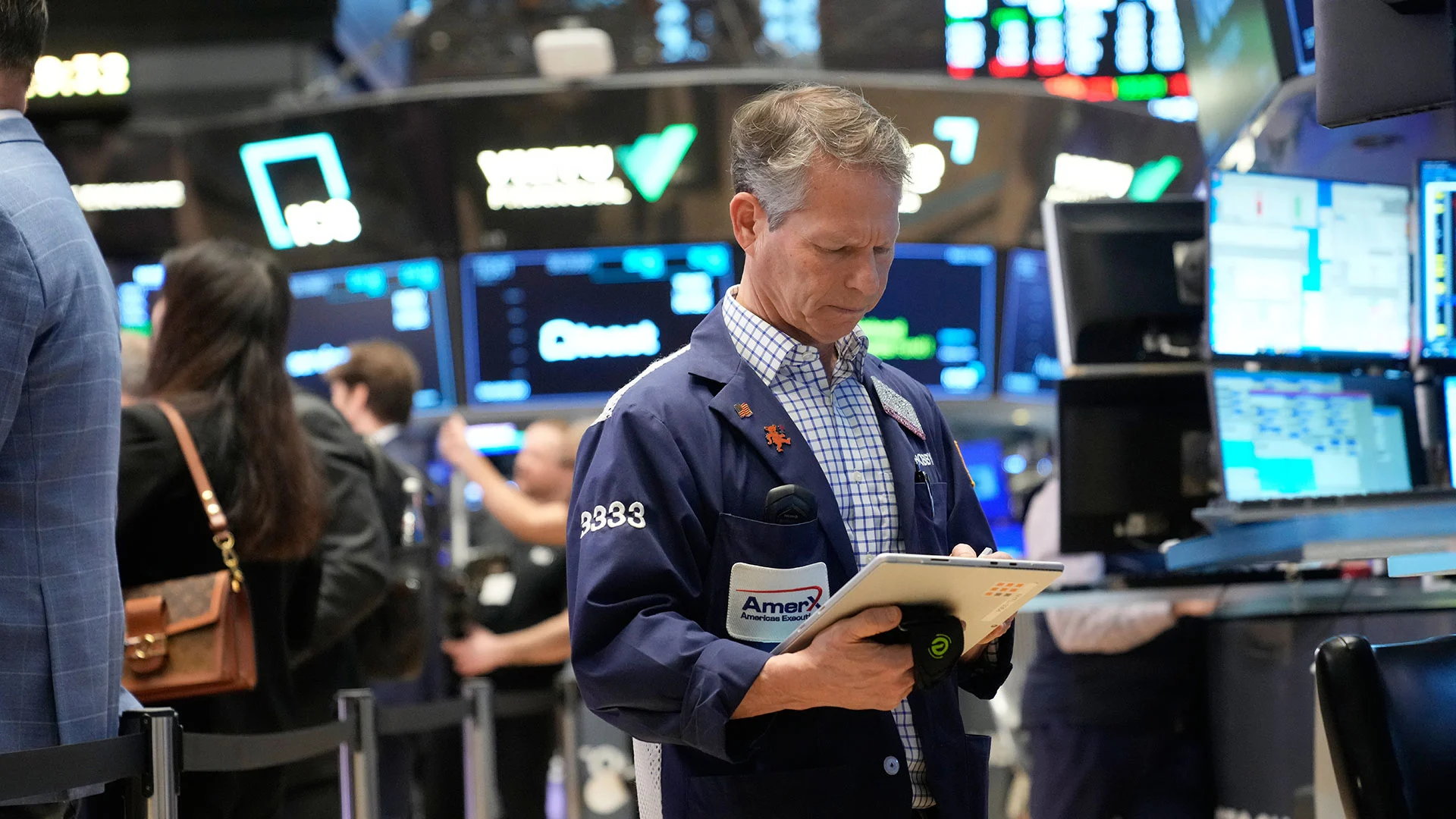
The immediate reaction in financial markets was swift and uneasy. Traders moved away from riskier assets while oil prices jumped rapidly, reflecting deep concern about the stability of global energy flows. At the centre of those fears is the Strait of Hormuz, a narrow shipping route between Iran and the Arabian Peninsula that carries roughly one fifth of the world’s crude oil exports. Any prolonged disruption there has the potential to reshape global energy pricing almost overnight.
Brent crude climbed above 112 dollars per barrel in early trading and briefly approached the 120 dollar mark. Those levels have not been seen since the global energy shock that followed Russia’s invasion of Ukraine in 2022. Prices later pulled back slightly to around 107 dollars per barrel as markets attempted to stabilise, though the overall trend still reflects significant anxiety among energy traders.
The recent surge in oil prices has been dramatic. Since the United States and Israel began coordinated strikes against Iranian targets on 28 February, oil prices have climbed more than 50 percent. Energy analysts say the increase reflects both real supply risks and the psychological impact that geopolitical conflict has on commodity markets.
Iran’s response has added to those concerns. Authorities in Tehran have halted most maritime traffic through the Strait of Hormuz, describing the move as retaliation for the attacks. Even a temporary interruption in shipping through this corridor carries global consequences. Energy markets rely heavily on the steady movement of oil tankers through the strait, and any blockage forces traders to price in the risk of shortages.
Financial markets in Asia were the first to react when trading opened on Monday. Japan’s Nikkei 225 index closed down 5.2 percent after falling as much as 7 percent earlier in the session. The scale of the drop reflected both the energy shock and broader fears that escalating conflict could damage global trade.
South Korea’s Kospi index also suffered a steep decline, losing nearly 6 percent in one of the market’s sharpest daily drops in recent years. Investors in the region are particularly sensitive to energy price spikes because many Asian economies depend heavily on imported fuel to power their industries.
Hong Kong’s Hang Seng index followed the same downward direction, ending the session in negative territory as investors moved money into safer assets.
European markets opened with similar caution. Rising energy prices often act like a hidden tax on economies because they increase costs for businesses and consumers at the same time. The pan European Stoxx Europe 600 index dropped about 1.9 percent during morning trading as investors weighed the potential economic fallout.
Germany’s DAX index declined about 2 percent while France’s CAC 40 also lost more than 2 percent. In London, the FTSE 100 traded lower as the majority of companies on the exchange moved into negative territory.
Helsinki’s main stock index opened the day down just over 2 percent as the global sell off reached Nordic markets. Several industrial companies led the decline, reflecting concern about rising raw material costs and the potential slowdown in global trade.
Steel producers Outokumpu and SSAB recorded some of the largest losses among major listed firms. Forestry company Stora Enso also moved lower along with engineering group Konecranes, both of which depend heavily on stable international markets for demand.
A small number of companies managed to avoid the broader downturn. Pharmaceutical manufacturer Orion posted a slight gain, reflecting the defensive nature of healthcare stocks during periods of global instability. Property investment company Citycon and insurance group Sampo also registered modest increases.
The mixed performance highlights a familiar pattern during geopolitical crises. Investors tend to retreat from industrial and export oriented companies while moving capital into sectors considered more resilient during economic shocks.
The escalation in the conflict became clearer over the weekend when new air strikes targeted Iranian oil infrastructure. Iranian state media reported attacks on oil storage facilities and energy transfer sites in Tehran and nearby provinces.
Energy infrastructure often becomes a strategic focus during military conflict because it plays a central role in national revenue and international leverage. Iran’s oil exports are a major source of government income, while the country’s geographic position gives it influence over one of the world’s most critical shipping corridors.
Iran’s Revolutionary Guard warned that further attacks on the country’s energy sector could push oil prices significantly higher. Such warnings are not merely rhetorical. Markets often respond immediately to signals that energy production or transportation could face additional disruption.
Global stock markets fall as oil prices surge during the US-Israel conflict with Iran because energy markets and financial markets are closely linked. When oil prices rise sharply, production costs increase across industries, transport becomes more expensive, and inflation pressures grow. Investors often react by reducing exposure to equities and shifting capital toward commodities or safe haven assets.
The Gulf region remains one of the most critical energy hubs in the global economy. Even temporary supply interruptions can ripple across markets from Tokyo to New York. Analysts warn that if the conflict continues to expand or directly targets oil production facilities, the economic consequences could stretch far beyond the Middle East.
Shipping disruptions have already forced several oil producers in the Gulf region to reduce output. Tanker congestion, security threats, and insurance complications have created bottlenecks that make it difficult to move crude oil safely through the region.
Energy companies now face the difficult task of balancing production with security risks. Even if oil remains available underground, the ability to transport it to international markets depends on stable shipping lanes.
Futures tied to major United States stock indices were also pointing lower ahead of the opening bell in New York, suggesting that the financial turbulence could extend across the Atlantic.
For investors and policymakers alike, the situation highlights how quickly geopolitical conflict can spill into economic reality. Energy supply chains remain deeply vulnerable to instability in the Middle East, and financial markets rarely ignore that risk for long.