Iran strikes Dubai International Airport in UAE, disrupting one of the busiest aviation hubs in the world and exposing vulnerabilities in regional security. On Saturday, operations at Dubai International Airport were suspended after a drone attack targeted an area near the airport terminals, sending shockwaves through the sprawling facility. Authorities said air defenses were activated, but passengers waiting for departures were forced to seek cover in train tunnels after alarms rang out across the terminal.
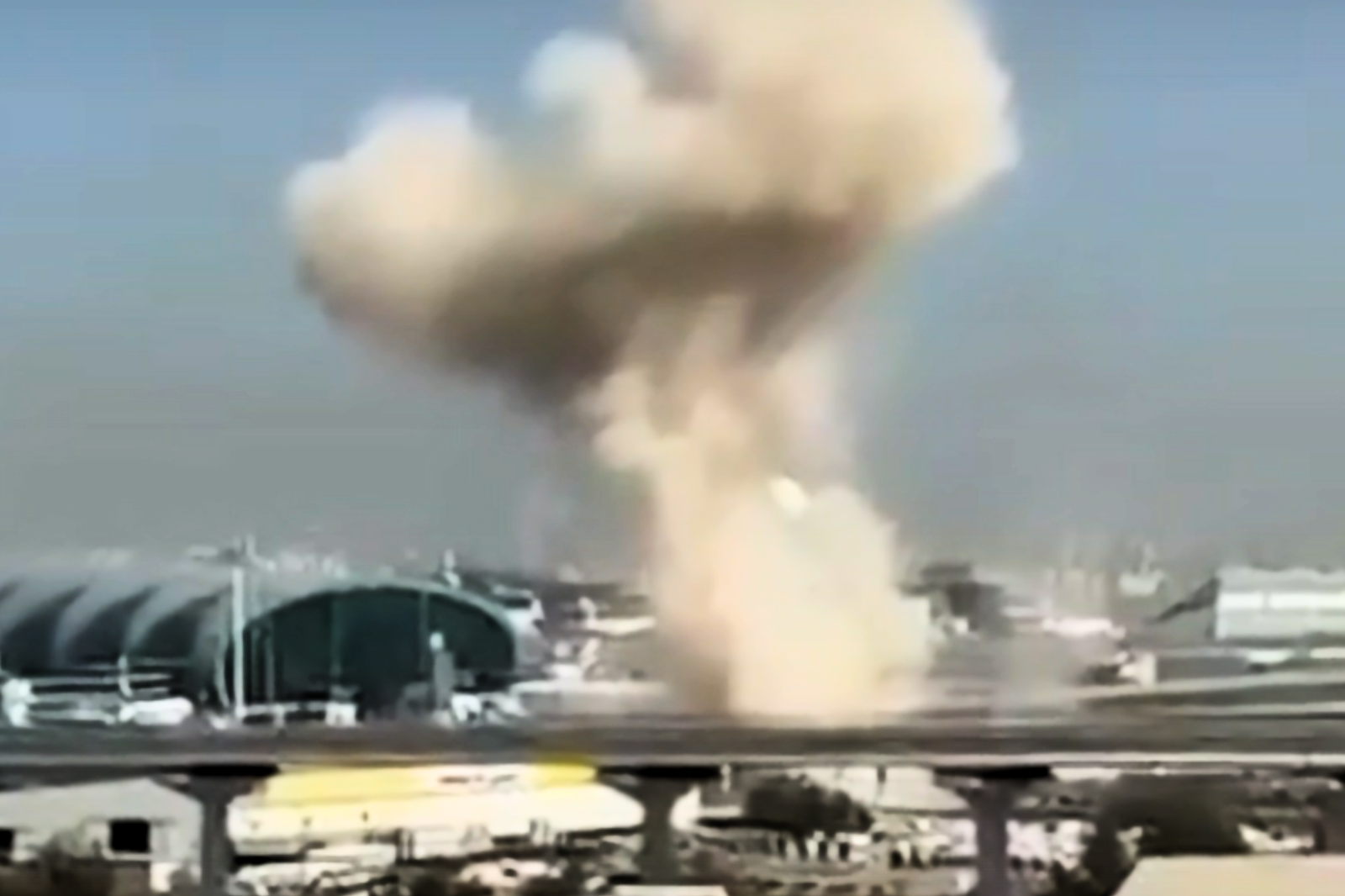
Eyewitnesses described a sudden explosion, followed by a thick cloud of smoke over the airport grounds. Residents across Dubai reported hearing multiple blasts, underscoring the reach of the attack beyond the immediate vicinity of the airport. The scale of the incident prompted Emirates Airlines to suspend all flights to and from Dubai until further notice. Travelers with bookings from February 28 to March 31 were offered options to rebook or claim refunds, as the airline worked to manage the disruption.
The United Arab Emirates government confirmed that an investigation has been launched to determine the origin of the drone, whether additional threats exist, and the potential coordination behind the strike. Officials also raised security levels across key infrastructure nationwide, signaling concern over the possibility of follow-on attacks.
Analysts suggest that the strike reflects a shift in regional tensions, highlighting the expanding use of unmanned aerial vehicles in precision attacks. Dubai International Airport, which handles tens of millions of passengers annually, represents both an economic target and a symbolic challenge to the UAE’s image as a secure international hub. The incident raises broader questions about the preparedness of high-traffic civilian infrastructure in conflict-prone areas and the emerging threat landscape in the Gulf.
The attack comes amid escalating regional tensions involving Iran, and it underscores how unconventional tactics can disrupt global travel networks within minutes. While no casualties were immediately reported, the disruption to air traffic and the swift activation of emergency protocols demonstrate both the scale of vulnerability and the efficacy of rapid response mechanisms in crisis scenarios. Security experts warn that monitoring of drone incursions and rapid response capabilities will need to be significantly enhanced if the UAE hopes to maintain the perception of invulnerability at its critical transport nodes.
The Dubai strike also carries implications for international airlines, insurance markets, and aviation security protocols, as insurers and global operators reassess risk exposure in a region where geopolitical conflicts increasingly intersect with commercial aviation. For Dubai, the attack serves as a stark reminder that even highly fortified economic centers are not immune from strategic attacks in a modern battlefield that blends military and civilian domains.
The incident at Dubai International Airport demonstrates the evolving nature of aerial threats in the Gulf. Security analysts note that while traditional air defense systems can intercept missiles and aircraft, low-altitude drones present new challenges. The UAE’s decision to place critical infrastructure on heightened alert reflects both caution and recognition that the current threat landscape requires a reevaluation of civilian protection measures.
The strike may also affect regional relations, drawing international attention to Iran’s capacity to project influence beyond its borders. For global travelers, the attack is a reminder that major airports, despite extensive security measures, can be caught off guard by rapidly deployed unmanned technology. Policymakers now face the task of balancing immediate protective measures with long-term strategies to prevent recurrence.