Cristiano Ronaldo to leave Saudi Arabia after an injury amid ongoing conflict in the Middle East has become a headline that stretches far beyond the normal boundaries of sports reporting. What first appeared to be a routine injury update surrounding one of football’s most recognizable figures quickly turned into a broader story involving late night aircraft movement, regional military tensions, and the uncertain timeline of an athlete whose career continues to command global attention well into his forties.
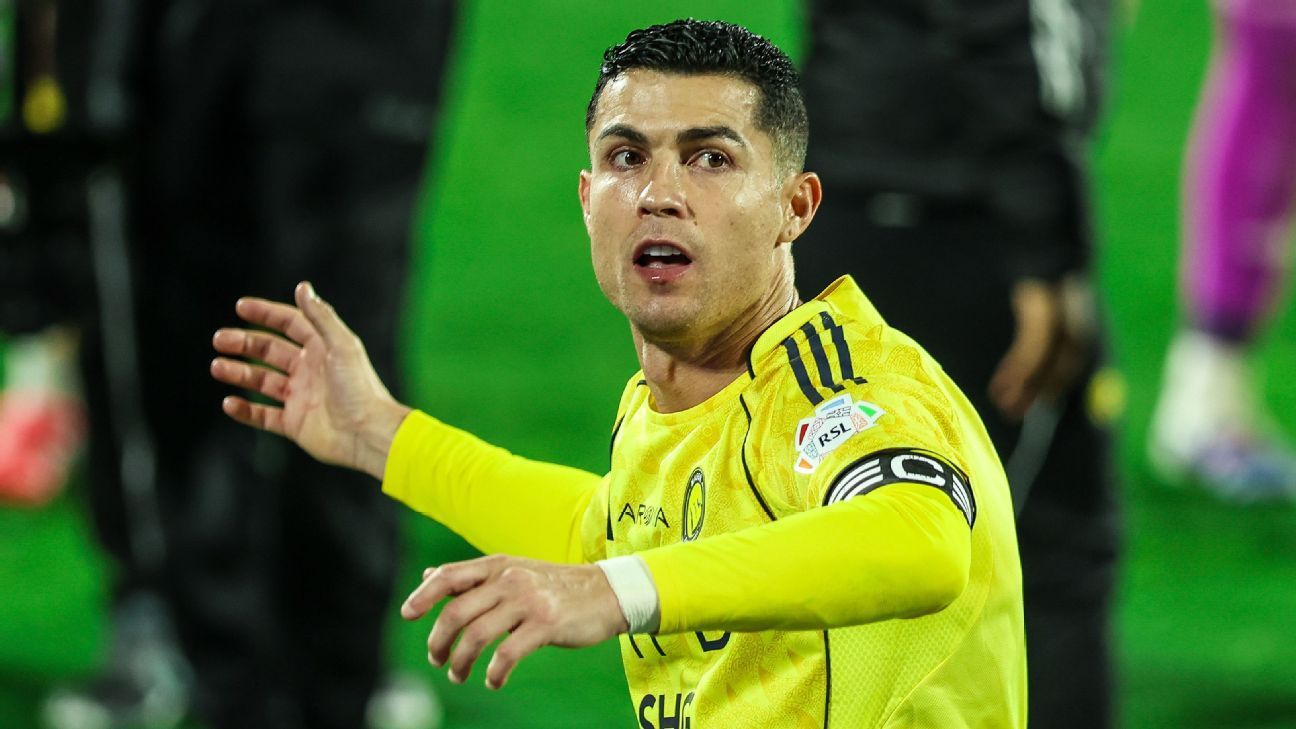
The 41 year old Al-Nassr forward is now expected to travel to Spain for treatment after medical assessments determined that the hamstring injury he sustained during the club’s recent league fixture is more serious than initially believed. For a player whose body has endured more than two decades at the top of professional football, even a muscle strain requires careful management. In Ronaldo’s case, every development carries implications that ripple through club ambitions, commercial partnerships, and the wider narrative surrounding the Saudi Pro League.
Speculation intensified late Monday when the Portuguese star’s £61 million private jet departed Saudi Arabia in the middle of the night. Observers tracking aircraft movement quickly began questioning whether Ronaldo had already left the country amid growing regional instability. The rumors spread quickly across football media and social platforms, fueled by the absence of immediate clarification from official sources.
Hours later, photographs surfaced showing Ronaldo alongside his Al-Nassr teammates in Riyadh, confirming that he had not yet departed. The aircraft movement had sparked curiosity, but the footballer remained in Saudi Arabia at that point. Even so, the episode highlighted the degree to which Ronaldo’s presence in the kingdom has become a subject of intense scrutiny, both within sport and beyond it.
The injury itself emerged during Al-Nassr’s 3-1 victory over Al-Fayha, a match in which Ronaldo completed the contest but appeared physically uncomfortable in its closing stages. Initial evaluations suggested a typical hamstring strain, the kind that often requires only a short period of recovery. Subsequent tests offered a less reassuring picture.
Al-Nassr manager Jorge Jesus addressed the situation directly when discussing the results of the medical examination. His remarks reflected the careful tone often adopted when dealing with high profile players whose fitness carries enormous weight for both club and league.
“After tests, we see the injury suffered by Cristiano Ronaldo was more serious than expected,” Jesus said. “Cristiano will now travel to Spain, like other players who went for treatment when they were injured.”
The manager added that the decision was taken after consultation with the player’s personal medical team. Ronaldo has long relied on specialized therapists in Spain, relationships that date back to his years at Real Madrid and have remained part of his professional routine ever since.
Cristiano Ronaldo to leave Saudi Arabia after an injury amid ongoing conflict in the Middle East also arrives at a delicate moment in the football calendar. For a veteran player whose career has already extended beyond what most professionals achieve, recovery timelines carry unusual significance. Each injury forces difficult calculations about risk, rehabilitation, and the sustainability of elite performance.
Ronaldo has built a reputation on physical discipline and relentless conditioning. His longevity has become part of his legend. Yet even the most meticulously maintained athlete cannot entirely escape the realities of age and accumulated strain. Hamstring injuries, particularly for players who rely on explosive acceleration, often demand patience that football schedules rarely allow.
The injury story has unfolded against a background of rising geopolitical tension across the Gulf region. Riyadh, where Ronaldo lives with his partner Georgina Rodriguez and their five children, has recently been drawn into a wider security situation involving drone activity and retaliatory strikes linked to escalating conflict between regional powers.
Over the past several days, the Middle East has witnessed a series of coordinated attacks involving the United States, Israel, and Iran. Those events triggered responses that have extended across multiple countries, placing several Gulf states on heightened alert.
Officials confirmed that two drones struck the United States embassy compound in the Saudi capital during overnight activity earlier in the week. The incident was followed by further reports of aerial threats targeting installations elsewhere in the region.
Iranian state media claimed responsibility for the destruction of a command and staff facility in Bahrain, while Saudi authorities reported intercepting additional drones east of Riyadh as the situation continued to evolve.
Although there has been no indication that Ronaldo himself faced direct danger, the proximity of these developments inevitably drew attention to the presence of one of the world’s most recognizable athletes living in the Saudi capital.
Ronaldo’s move to Al-Nassr was never simply about football. When he arrived in Saudi Arabia in 2023, the signing marked a turning point in the kingdom’s broader effort to reshape its international sporting profile. His presence brought unprecedented global visibility to the Saudi Pro League and opened the door for a wave of high profile transfers from Europe.
Since then, the league has attracted major names from across world football, transforming domestic competition into an increasingly international spectacle. Stadium attendance rose. Broadcasting deals expanded. Saudi Arabia positioned itself as a new destination for elite athletes seeking both financial reward and fresh challenges.
In that context, Ronaldo’s temporary departure for medical treatment carries symbolic importance. He remains the most recognizable face associated with the Saudi Pro League project. Any development involving his availability inevitably becomes part of a wider narrative about the league’s credibility and ambitions.
Even after two decades at the center of world football, Ronaldo’s career continues to generate attention that few athletes experience. Injury updates, travel plans, and training appearances quickly become global talking points.
The episode surrounding his forthcoming trip to Spain reflects that reality. A routine rehabilitation decision has unfolded alongside speculation about aircraft movements, security conditions in Riyadh, and the future trajectory of a player who remains central to both club and league ambitions.
For Al-Nassr, the priority is straightforward. Ronaldo’s recovery must be handled carefully to ensure he can return to the pitch without risking further damage. For Ronaldo, the objective remains unchanged from the beginning of his career: maintain the physical standard that has defined his success for more than twenty years.
Cristiano Ronaldo to leave Saudi Arabia after an injury amid ongoing conflict in the Middle East may have begun as a medical update. Yet the story reveals something deeper about modern sport. Elite athletes now operate in environments where football results, global politics, commercial investments, and personal security increasingly overlap.
In that environment, even a hamstring injury can evolve into a headline that captures the attention of the entire sporting world.