
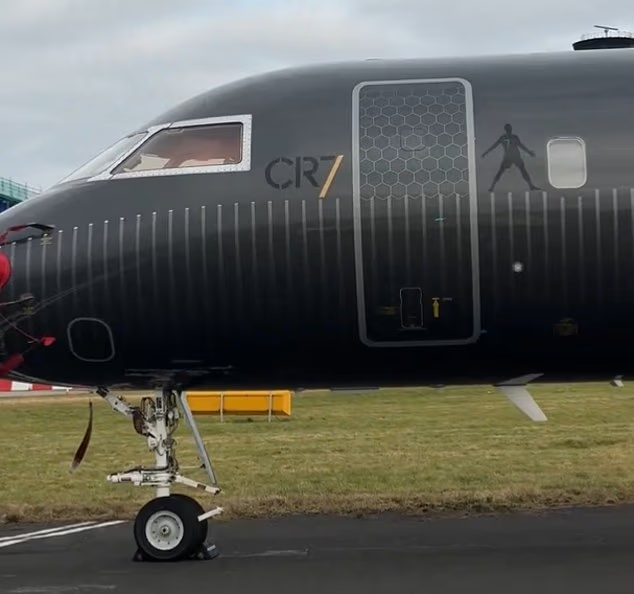
Cristiano Ronaldo’s private jet left Riyadh late on Sunday night, carrying the football superstar from Saudi Arabia to Madrid as regional tensions escalated following a series of drone attacks. The 41-year-old athlete, who resides in the Saudi capital with partner Georgina Rodriguez and their five children, departed in his £61 million Bombardier Global Express as conflict intensified around the city.

The move comes after two drones struck the United States embassy in Riyadh, prompting international concern and raising questions about civilian safety in the region. Iranian state media also reported that a command and staff building in Bahrain had been destroyed, further inflaming tensions in the Gulf.
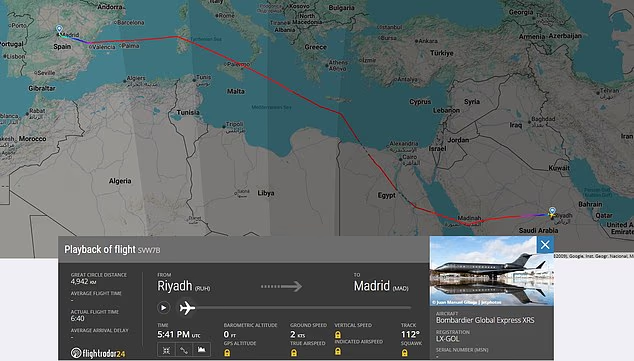
Flight tracking data shows Ronaldo’s jet left Riyadh at approximately 8:00pm local time, navigating a nearly seven-hour route across Egypt and the Mediterranean before touching down in Madrid around 1:00am. The flight path, recorded on Flightradar24, highlights the lengths private aviation can provide in moments of geopolitical uncertainty.
The US State Department has issued urgent advisories for Americans to depart multiple Middle Eastern countries due to growing safety risks. Officials warned that anyone east of Egypt should consider leaving immediately, a directive that coincided with a surge of commercial flights turning back from Riyadh. Airports became scenes of chaos as thousands of foreign nationals scrambled to exit the region amid the ongoing hostilities.
Riyadh, a city normally defined by its rapid development and global business presence, now faces an unprecedented security challenge. The attacks mark the fourth consecutive day of regional conflict, with civilians caught in the crossfire and high-profile residents, including international sports stars, taking immediate precautions.
Ronaldo’s departure underscores the broader uncertainty confronting expatriates in the Middle East. While his flight attracted attention due to his global celebrity, it reflects a pattern increasingly observed among foreign nationals seeking to leave areas of active conflict. The incident also emphasizes the intersections between global mobility, security considerations, and the choices made by high-profile figures in volatile environments.
As the situation evolves, the world watches how Middle Eastern states, foreign governments, and private citizens respond. Evacuation decisions, whether by private jet or commercial airline, are becoming an urgent necessity for those in proximity to conflict zones. Ronaldo’s move to Madrid may appear extraordinary, but it echoes a larger exodus of people seeking safety amid escalating tensions that show little sign of abating.


